When weathered, rusted ancient artifacts are mended and centuries-old garden relics regain their former glory, what stories lie behind the transformation?
Recently, Shanwu (Mending Relics): Beijing Historical Garden Relics Restoration Achievement Exhibition (2022–2025) Relics Exhibition officially opened at the Make-Up Pavilion Exhibition Hall in the De He Yuan (Garden of Virtue and Harmony) of Summer Palace.
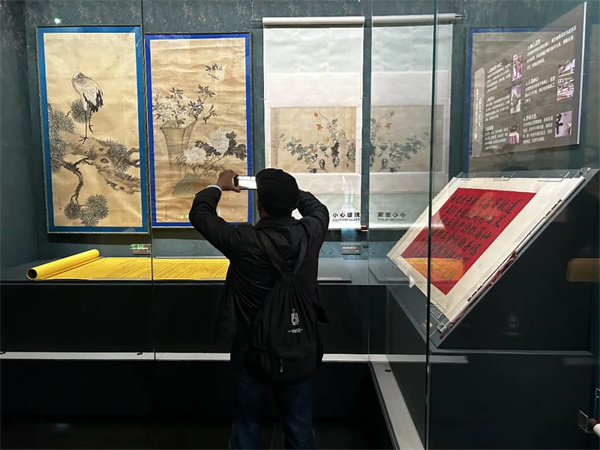
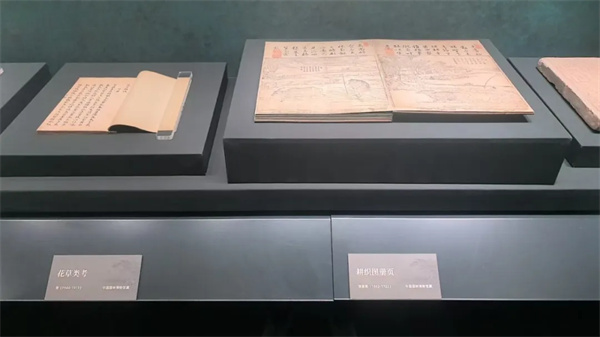
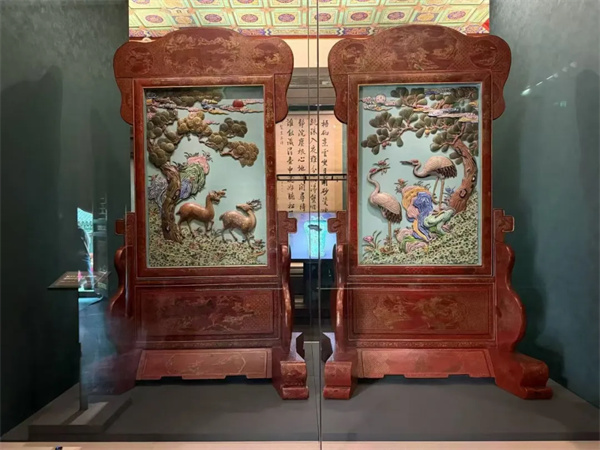
A total of 65 items/sets of precious cultural relics are on display, bringing the behind-the-scenes stories of relic restoration to the public and offering an immersive look at the entire restoration process.
Beijing's municipal historic gardens represent the pinnacle of classical Chinese garden art. The precious relics housed within have weathered hundreds of years and witnessed the changes of eras. Visiting this exhibition helps the public update their understanding of cultural heritage conservation: relic restoration is like performing precise medical treatment on artifacts.
Hosted by the Beijing Municipal Administration Center of Parks and organized by the Summer Palace, the exhibition focuses on the conservation and restoration achievements of movable cultural relics in municipal historic gardens from 2022 to 2025.
Centered on the theme of "Diagnosis — Treatment — Inheritance," the exhibition is divided into three sections: Identifying Relics and Inspecting Damage, Craftsmanship in Restoration, and Sustainable Inheritance. Together they reproduce the complete process of a cultural relic—from examination and diagnosis, to targeted restoration, to the continuation of its cultural legacy.
Enter the first section, Identifying Relics and Inspecting Damage—the "consultation room" for cultural relics.
Visible damage is only the tip of the iceberg; many invisible defects lie within. Restorers use various scientific instruments to detect micro-level damage, assess the condition based on solid scientific data, and formulate rigorous restoration plans step by step. No hasty action is taken. Consultation first, then assessment—this is the first step of relic restoration, laying a solid foundation for the "rebirth" of artifacts.
The Craftsmanship in Restoration section formally begins the "treatment" phase.
Relic restoration is by no means simple refurbishment. Restorers strictly adhere to three golden principles—"restoring the old as it was," "minimal intervention," and "reversibility"—applying targeted solutions to relics of different materials. They do not arbitrarily erase traces of time, and preserve the historical information carried by relics to the greatest extent. Every repair is made with prudence and restraint, craftsmanship embodied in every detail.
If technology gives relics a new life, then the transmission of skills ensures this craft endures. The Sustainable Inheritance section focuses on the successive dedication of cultural heritage conservators. Relic restoration techniques rely on oral instruction and hands-on practical teaching.
Senior craftsmen share years of practical experience without reservation, while younger restorers uphold tradition and pursue innovation on this basis. Old and new forces work in succession, guarding the cultural legacy of Chinese classical gardens from generation to generation.
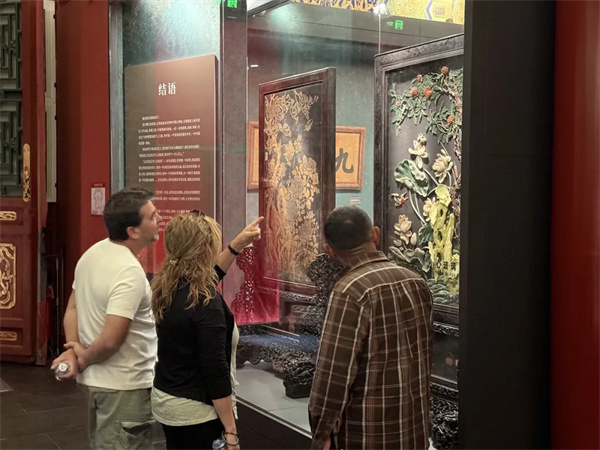
In the exhibition hall, many visitors stop before the exhibits, saying they have gained much.
Mr. Li, a cultural relic enthusiast, said: "Restoring cultural relics is far more than simple gluing and patching. It is more like diagnosing and treating artifacts—you must first assess the damage, then formulate a restoration plan."
Many visitors come to realize after the exhibition that relic restoration is not only rigorous, professional technical work, but also a guardianship spanning the years. Restorers work at their benches year-round, patiently mending damaged relics bit by bit, bringing long-silent ancient artifacts back into view for people today to appreciate and understand.
An official from the Cultural Relics Conservation Department of the Summer Palace said the exhibition pays tribute to 20 years of dedicated cultural heritage conservation by the Beijing Municipal Administration Center of Parks, and also serves as a focused review of restoration achievements over the past three years. The exhibition is thoughtfully designed to translate obscure restoration processes and professional conservation principles into content ordinary audiences can understand.
Here, visitors can not only view the exquisite restored relics, but also see actual restoration tools, materials and work records up close. It lifts the veil of mystery, allowing people to truly feel the craftsmanship behind relic restoration and appreciate the unique charm of classical garden cultural relics.
Exhibition Tips
Exhibition Name: Shanwu: Beijing Historical Garden Relics Restoration Achievement Exhibition (2022–2025) Relics Exhibition (Summer Palace)
Duration: Until February 28, 2027
Venue: Banxi Tower Exhibition Hall, Garden of Virtue and Harmony, Summer Palace
Admission: No separate charge for the exhibition. Visitors must hold a Summer Palace entrance ticket and purchase an additional 5-yuan ticket for the Garden of Virtue and Harmony; alternatively, a Summer Palace combined ticket covering the main entrance and inner gardens, including the Garden of Virtue and Harmony, is available.
Opening Notice: The exhibition hall is closed on Mondays, except on statutory holidays.