
• icon_1.png
    1900+
    over 1900 AI enterprises
  • icon_2.png
    265
    listed companies
  • icon_3.png
    49
    unicorn enterprises
  • icon_4.png
    10,000
    nearly 10,000 national-level high-tech enterprises

BUSINESS OPPORTUNITIES

"1+X+1"MODERN INDUSTRY SYSTEM

ARTIFICIAL
INTELLIGENCE

TECHNOLOGY SERVICE

KEY INDUSTRIES

POTENTIAL INDUSTRIES

  • Software and Information Services

  • Medicine and Healthcare

  • Commercial Spaceflight

  • Application and Innovation of Information Technologies

  • Integrated Circuits

  • New Energy

  • Advanced Materials

  • Intelligent Manufacturing

  • Embodied Artificial Intelligence

  • Quantum

  • Intelligent Connected Vehicles

  • Metaverse

  • 6G

  • Optoelectronics

  • Brain-Computer Interface

  • Synthetic Biology

KEY ZONES

  • Phase I of Xibeiwang Science Park

  • Xinyu Zone of Yongfeng Industrial Base

  • Pilot Area of General Artificial Intelligence Innovation Park

  • Zhongguancun Comprehensive Bonded Zone

  • Phase II of Wenquan Science Park

  • Zhongguancun West Area Artificial Intelligence Industrial Park

  • Sijiqing Life Science & Technology Park

  • Siji Huigu

  • International Medical Valley

  • Haixing Pharmaceutical Health Innovation Park

  • Sujiatuo Future Energy Industrial Park

  • Wudaokou Artificial Intelligence Industrial Park

  • Phase II of Zhongguancun Dongsheng Technology Park

  • Phase III of Zhongguancun Dongsheng Technology Park

  • Beihang University Science Park

  • Artificial Intelligence Industrial Park of Peking University West Gate

  • Zhongguancun National Defense Science Park (Beijing Institute of Technology Science Park)
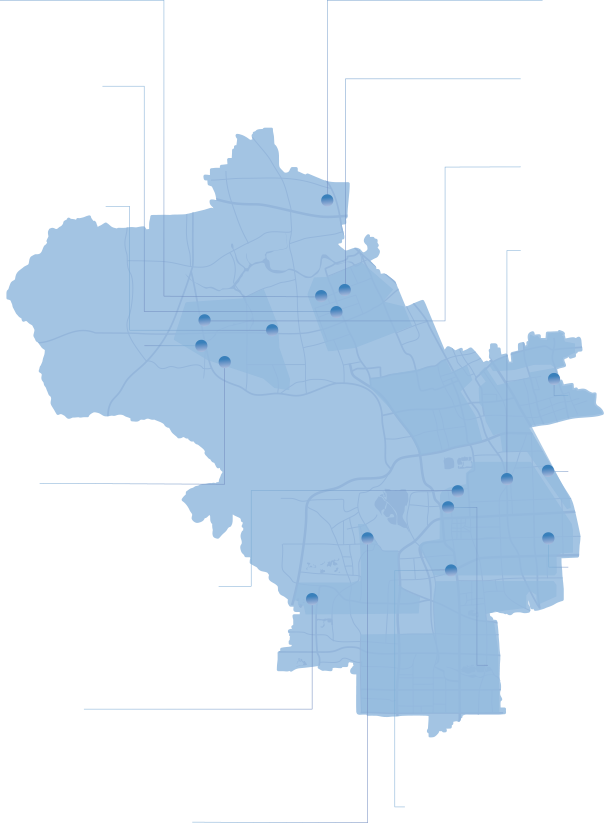
  • Phase I of Xibeiwang Science Park

  • Xinyu Zone of Yongfeng Industrial Base

  • Pilot Area of General Artificial Intelligence Innovation Park

  • Zhongguancun Comprehensive Bonded Zone

  • Phase II of Wenquan Science Park

  • Zhongguancun West Area Artificial Intelligence Industrial Park

  • Sijiqing Life Science & Technology Park

  • Siji Huigu

  • International Medical Valley

  • Haixing Pharmaceutical Health Innovation Park

  • Sujiatuo Future Energy Industrial Park

  • Wudaokou Artificial Intelligence Industrial Park

  • Phase II of Zhongguancun Dongsheng Technology Park

  • Phase III of Zhongguancun Dongsheng Technology Park

  • Beihang University Science Park

  • Artificial Intelligence Industrial Park of Peking University West Gate

  • Zhongguancun National Defense Science Park (Beijing Institute of Technology Science Park)

Phase I of Xibeiwang Science Park
1.png

Located in Xibeiwang, with a total floor area of approximately 240,000 square meters, this park is designed as an eco-town for sci-tech innovation. Serving as a business zone, an industrial hub, and a residential area, it is ideal for enterprises in the information technology, big healthcare and life sciences, technology service, and other related industries.

Xinyu Zone of Yongfeng Industrial Base
2.png

Located in Yongfeng Industrial Base, with a total floor area of 150,000 square meters, this park is suitable for enterprises of the next-generation information technology, artificial intelligence, intelligent manufacturing and other high-end, precision and cutting-edge industries.

Pilot Area of General Artificial Intelligence Innovation Park
3.png

The area is located in Cuihu Science Park, with a total floor area of 100,000 square meters. Currently, intelligent computing facilities are under development here. It aims to become a next-generation information industry cluster focusing on artificial intelligence.

Zhongguancun Comprehensive Bonded Zone
4.png

Located in Wenquan Town, Haidian District, it is China's first comprehensive bonded zone underscoring R&D and innovation. The zone focuses on developing a "2+2+N" bonded service spectrum, with integrated circuits and pharmaceuticals as the core and artificial intelligence and sci-tech services as the priorities. It also aims to explore bonded service formats such as headquarters economy, cross-border/boundary e-commerce, digital culture, financing leasing, and high-end software service outsourcing. Within the zone, 90 percent of the industrial space is allocated for R&D and experiments, with specifications such as floor height and load-bearing capacity meeting the requirements for lab-scale trials and pilot-scale trials. The zone plans to develop "three distinctive platforms": an experimental space support platform, a public technology sharing platform, and an online-offline collaboration platform. These will form an integrated "one-stop" service system covering policy services, financing support, resource empowerment, and intellectual property, and achieve the goals of "reduce operational costs, improve customs clearance efficiency, ensure compliance and security, and promote international cooperation".

Phase II of Wenquan Science Park
5.png

Located in Wenquan Town, this park provides approximately 50,000 square meters of industrial space. It benefits from the policies of "Four Zones" and offers independent buildings covering 11,000 to 13,000 square meters and standard floor spaces ranging from 1,200 and 1,700 square meters to meet the needs of enterprises of various scales. The park is positioned for the artificial intelligence, next-generation information technology, advanced materials, embodied intelligence, and other high-end, precision and cutting-edge industries.

Zhongguancun West Area Artificial Intelligence Industrial Park
6.png

Located in Zhongguancun West Area, with a total floor area of 190,000 square meters, it houses the China Technology Exchange Center and Innoway. The park focuses on high-end, precision and cutting-edge industries such as artificial intelligence and integrated circuits.

Sijiqing Life Science & Technology Park
7.png

Located in the Sijiqing area, with a total floor area of approximately 140,000 square meters, this park focuses on developing three main industries: medical devices, healthcare, and biomedicine, striving to make itself a leading hub for Beijing's medicine and health industry cluster.

Siji Huigu
8.png

Located on the north side of Minzhuang Road, with a total floor area of 280,000 square meters, this park is recognized as the "National Cybersecurity Industrial Park (Haidian) (Incubation Zone)" jointly by the Ministry of Industry and Information Technology of China and the Beijing Municipal Bureau of Economy and Information Technology. It focuses on the cybersecurity, next-generation information technology, healthcare, and other high-end, precision and cutting-edge industries.

International Medical Valley
9.png

Located in Shangzhuang Town, with a total floor area of 810,000 square meters, the park meets the various demands of experimental testing and production. It is ideal for Chinese and foreign enterprises in the innovative pharmaceuticals, high-end medical device, intelligent healthcare, and other related sectors.

Haixing Pharmaceutical Health Innovation Park
10.png

Located in the Yongfeng Industrial Base, with a total floor area of 160,000 square meters, this park has been upgraded through the renovation of old factory buildings, transforming idle spaces into high-quality facilities for the biopharmaceutical industry. The park focuses on biomedicine.

Sujiatuo Future Energy Industrial Park
11.png

Located on both sides of Wenyang Road in Sujiatuo Town, this park has a planned above-ground floor area of 280,000 square meters. It is positioned to develop industries concerning energy and environmental technologies.

Wudaokou Artificial Intelligence Industrial Park
12.png

Located in the Wudaokou area, with a total floor area of 120,000 square meters, it houses BAAI Building, Dongsheng Building, I-M-WAY, and Yousheng Building. Adjacent to over 50 renowned universities and research institutes (including Tsinghua University, Peking University, PBC School of Finance, and the Chinese Academy of Sciences), the park focuses on high-end, precision and cutting-edge industries such as artificial intelligence and intelligent manufacturing.

Phase II of Zhongguancun Dongsheng Technology Park
13.png

Located in Dongsheng Town, with a total floor area of approximately 960,000 square meters, the park is designed for frontier industries, such as digital economy, life sciences and healthcare, new energy, and advanced materials. It focuses on the next-generation information technology and other high-end, precision and cutting-edge industries.

Phase III of Zhongguancun Dongsheng Technology Park
14.png

Located in Beishatan, with a total floor area of approximately 250,000 square meters, this part is calibrated against world-class green and eco-friendly office parks. It is set to become a new landmark at the eastern gateway of Haidian District and a new hub within Zhongguancun's core sci-tech innovation area.

Beihang University Science Park
15.png

Located on Xueyuan Road, with a total floor area of 400,000 square meters, the park comprises four buildings: Baiyan, Shining, Weishi, and Zhizhen. It is a national-level university science park, one of the earliest A-class (excellent) university science parks, and one of the earliest selected national future industry science parks. The park focuses on the aerospace, embodied intelligence, integrated circuits, and other high-end, precision and cutting-edge industries.

Artificial Intelligence Industrial Park of Peking University West Gate
16.png

Located in the West Gate area of Peking University, with a total floor area of 93,000 square meters, it includes Future Technology Building and Zhongguancun International Innovation Building. It focuses on high-end, precision and cutting-edge industries such as artificial intelligence.

Zhongguancun National Defense Science Park (Beijing Institute of Technology Science Park)
17.png

Located in the Suzhou Bridge area, with a total floor area of 240,000 square meters, this is the only specialized park whose name includes "national defense" within Zhongguancun Demonstration Zone. It is a national-level university science park, one of the earliest A-class excellent national university science parks, and one of the earliest national future industry science parks. The park focuses on the next-generation information technology, intelligent manufacturing, technology service and other high-end, precision and cutting-edge industries.

BUSINESS ENVIRONMENT

POLICY SUPPORT

14 Policies of the Yangfan Plan to Assist Enterprises

The Exit-Entry Administration of the Beijing Municipal Public Security Bureau, in conjunction with Beijing border control authorities, shall provide convenient customs clearance services for foreign talent invited by "Yangfan" enterprises to Beijing for business investigation, visits and exchanges, participation in major conferences and events, among others.

SUCCESS STORIES

FIND MORE

Haidian Establishes a Powerful Alliance to Build World-Leading Science Parks

Haidian has continued to deepen international cooperation. The Alliance signed an agreement with IASP to promote resource sharing; Zhongguancun No.1 signed a deal with Teknopark Istanbul in Türkiye to build a cross-border channel for industrial connectivity. The "Global Service Partners of Haidian District" were awarded plaques, systematically forming a key hub linking the global innovation network.

How Has Zhongguancun Won Global Favor?

Haidian is also home to Zhongguancun Comprehensive Bonded Zone. There, goods can enjoy barrier-free customs clearance, and materials can be used for bonded R&D. Global production factors for sci-tech innovation are converged here, and after being transformed into products, they are shipped to the rest of the world. It is hailed by entrepreneurs as a "cost lowland" and a "strategic fulcrum". How has this "tech free port" broken down institutional barriers and become a key link connecting global innovation?

Haidian Sets Stage for Youths Pursuing Their Dreams

On the afternoon of November 19, amid inspiring youth declarations, the Global Young Leaders Dialogue Annual Forum 2025 officially kicked off in Haidian, Beijing, with 150 young people from various sectors representing more than 40 countries in attendance.

Novozymes Recognized Among First 'Global Service Partners' of Beijing

At the event, Novozymes (China) Investment Co., Ltd., a key foreign-funded enterprise in Haidian, was recognized among Beijing's first "Global Service Partners" for its outstanding biological solutions and global services.

ARTIFICIAL INTELLIGENCE
new_dt1.png

As the region with the strongest foundation for AI industrial development in China, Haidian possesses the richest talent pool and the strongest R&D capabilities, highlighted by the most dynamic product iteration. The district is fully implementing the strategic plan of "mobilizing citywide resources to build a well-known, influential AI industrial hub with Haidian at its core". Leveraging its role as the leading force in artificial intelligence (AI), the district is driving intelligent empowerment across industries and advancing the development of a modern industrial system.
 
Haidian District is home to 12,300 experts and scholars in the fields of AI — over 80% of Beijing's total. It also hosts 101 scientists listed in "AI 2000 Scholars", representing over 80% of Beijing's and nearly 40% of China's total. A total of 18 national key laboratories in the AI-related fields and 5 new-type R&D institutions are also located here. It is home to Zhongguancun Academy, the College of AI of Tsinghua University, and five national AI industry-education integration innovation platforms. A total of 21 universities here have been approved to offer undergraduate programs related to AI. There are over 1,900 AI enterprises in the district. In 2024, the core output value of the AI industry in Haidian reached 282.2 billion yuan, with a growth rate of 30%. The district has constructed Beijing's first intelligent computing cluster with a capacity of 10,000 petaflops, and its model corpus center has aggregated over 180 datasets. It is striving to become a leading hub for comprehensive AI empowerment, having set up shared platforms such as the Elastic Computing Power Laboratory and Gewu Community. A total of 95 large-scale models have been registered, accounting for nearly 70% of Beijing's total and a quarter of China's total. The district has formed a comprehensive layout covering chips, deep learning frameworks, data processing services, large-scale models, and scenario applications.
 
Leading universities and research institutions, such as Peking University, Tsinghua University, and the Chinese Academy of Sciences, are actively conducting research on key AI4S (AI for Science) technologies. Research institutions, such as the Beijing Academy of Artificial Intelligence, the AI for Science Institute, and Zhongguancun Institute of Artificial Intelligence, have achieved multiple landmark results, while leading enterprises are accelerating the industrial application of AI4S.
 
In terms of new drug development, the district supports foundational models in the bioscience field to empower the R&D of protein drugs, small-molecule drugs, and delivery systems.
 
Regarding data empowerment, the district is constructing the "Beijing Trusted Data Space for Medicine and Healthcare", integrating multi-source data from China's national medical insurance system, Beijing's medical insurance system, specialized clinics of hospitals' advantageous disciplines, medical institution diagnoses and treatments, public health, and biological sample repositories, among others. This initiative focuses on providing professional data support for scenarios such as pharmaceutical development, medical device development, commercial services, and the training of vertical AI models.

TECHNOLOGY SERVICE INDUSTRY
new_dt2.png

1.Haidian District is enhancing its capacity to aggregate innovative resources for the sci-tech service sector, providing professional support across the entire technological innovation chain. This accelerates research outcomes and the rapid growth of high-potential enterprises, promotes deeper integration of the "industry-innovation-capital-talent" chains, and ensures that sci-tech achievements can be converted into new quality productive forces smoothly.
 
2.In 2024, the revenue of Haidian's above-designated-size sci-tech service enterprises reached 312.66 billion yuan, surpassing the 300-billion-yuan threshold for the first time in history. The sci-tech service industry ranks as Haidian's second-largest pillar industry, right behind the information and software service industry.
 
3.Supported by a robust sci-tech service ecosystem, Haidian leverages the leading roles of industry-leading and chain master enterprises, fostering collaboration between cutting-edge firms and academic institutions for innovation. 
 
4.The district has been strengthening specialized fields such as startup incubation, intellectual property, and technology consulting, delivering higher-quality services to amplify its driving effect on technological innovation and industrial development.
 
5.As the core area of Beijing's International Center for Science and Technology Innovation, Zhongguancun Science City consistently stands at the forefront of innovation. Guided by the mission to serve the national strategy of building China into a world leader in science and technology, and driven by pioneering reforms, it strives to lead and set an example in developing a world-leading science park. The district is accelerating its efforts to make it a modernized, high-quality district, positioning itself as the vanguard of high-quality development and a demonstration zone for new quality productive forces in the capital for the new era.
 
6.By 2027, Haidian aims to take the lead in constructing a first-class science park, creating a globally significant source of original innovation, an industrial development hub of global prominence, a key node in the global innovation network, a globally competitive innovation ecosystem, and an international, high-quality exemplary district. By 2035, Zhongguancun Science Park seeks to be a world-class scientific center, innovation hub, and a key benchmark among the world's leading science parks. 

Medicine and Healthcare
new_dt3.png

Positioned as an "AI-Empowered Healthcare Pilot Zone" and a "Medical Engineering Interdisciplinary Innovation Demonstration Zone", Haidian has fostered a development landscape marked by a strong talent pipeline, a comprehensive range of foundational disciplines, active cross-sector collaboration, and deep integration of cutting-edge technologies.
 
Haidian District is home to over 30,000 medical and healthcare researchers, accounting for 43.8% of Beijing's total. It also hosts 110 academicians in the field, representing 20.6% of China's total. The district is home to 36 national key laboratories and 25 national engineering technology research centers in the fields of medicine and healthcare.
 
Numerous leading institutions, including Tsinghua University, Peking University, the Chinese Academy of Sciences, and the northern campus of Peking Union Medical College, are located here. The district is also home to 57 hospitals ranked at or above the secondary level, such as Peking University Third Hospital, Beijing Cancer Hospital, the Chinese PLA General Hospital, and Xiyuan Hospital. With over 700 medical and healthcare enterprises—including 36 national-level little giants and 21 listed companies—Haidian hosts 52 enterprises featured on Beijing's key healthcare enterprise list, representing 21.4% of the city's total. In 2024, the output of the medical and healthcare industry exceeded 105.9 billion yuan, accounting for approximately 11% of Beijing's total.

Commercial Spaceflight
new_dt4.png

As the primary carrier area for artificial satellite development, Haidian District is home to over 60% of China's chief commanders, chief designers, and head designers for satellite models, as well as more than 50% of the country's aerospace academicians. Led by state-backed giants, such as China Aerospace Science and Technology Corporation (CASC) and China Aerospace Science and Industry Corporation (CASIC), Haidian has attracted key research institutions including the Aerospace Information Research Institute, Institute of Mechanics, and National Space Science Center under the Chinese Academy of Sciences. It also benefits from strong academic support, with Peking University, Tsinghua University, Beihang University, and Beijing Institute of Technology offering aerospace-related programs, making the district a cradle for aerospace talents.
 
Nearly 200 aerospace enterprises and research institutes are located in the district, accounting for about 60% of Beijing's total. In 2024, the district's aerospace industry recorded an output of approximately 130 billion yuan, of which commercial aerospace contributed over 30 billion yuan. With 119 satellites currently in orbit, the district has built a full industrial ecosystem spanning satellite development, ground station and terminal equipment, satellite monitoring and control, and satellite operations, among others.

Application and Innovation of Information Technologies
new_dt5.png

Haidian has developed a complete industry chain system for chips, operating systems, databases, middleware, storage, application software, cloud services, system integration, cybersecurity, and complete machines. Zhongguancun Software Innovation Center, centered around self-developed operating systems and software development tools, is leading the development of a full-stack, self-controllable ecosystem for both hardware and software. The district has cultivated numerous industry-leading companies and hidden champions.

Integrated Circuits
new_dt6.png

Haidian District has established an integrated circuit (IC) industry system centered around the design sector, encompassing testing, and equipment and materials R&D. It has also formed a coordinated innovation and development pattern characterized by "one area and one belt." The "one area" refers to the university-surrounding area along Xueyuan Road and Zhichun Road, which houses the Beijing Institute of Open Source Chip and a number of IC start-ups. The "one belt" denotes the enterprise-surrounding area along Beiqing Road, which boasts significant spatial advantages and includes parks such as Zhongguancun Integrated Circuit Design Park (IC PARK) and Zhongguancun No.1.

New Energy
new_dt7.png

Haidian District has top-tier universities, research institutes, and sci-tech research teams, including Tsinghua University (Department of Electrical Engineering), Peking University (School of Materials Science and Engineering, College of Engineering), the Chinese Academy of Sciences (Institute of Physics, Technical Institute of Physics and Chemistry, Institute of Process Engineering), and the China Electric Power Research Institute. It accounts for approximately 40% of the listed companies in Beijing, boasts 19 national-level little giants, as well as 124 municipal-level specialized, high-end and innovation-driven SMEs that provide distinctive products or services. The district also houses 21 institutions, such as the International Hydrogen Energy Center, the China Energy Storage Alliance, the National Key Laboratory for Power Grid Security, and the National Engineering Research Center for Simulation of New Power Systems.
 
In 2024, the revenue of the new energy sector in Haidian District exceeded 100 billion yuan, covering the entire value chain including energy production, transmission, distribution, storage and consumption, as well as supporting services.

Advanced Materials
new_dt8.png

Haidian District is home to a cluster of top-tier universities, research institutes, and sci-tech research institutions, including Tsinghua University, Peking University, the University of Science and Technology Beijing, Beihang University, the Chinese Academy of Sciences (Institute of Physics, Institute of Chemistry, Institute of Semiconductors), and the Beijing Graphene Institute. The district also hosts over 100 enterprises in the advanced materials sector, covering the entire value chain including material computational simulation, material preparation, material processing, and testing. Notably, it is home to Beijing's one and only "National High-Tech Industrialization Base for Advanced Materials".

Intelligent Manufacturing
new_dt9.png

The district now has a comprehensive layout for industry and supply chains, with an industry chain cluster already taking shape. It has developed a National New Industrialization Industry Demonstration Base in the field of industrial Internet and has built the Beijing Center of the National Innovation Institute of Digital Design and Manufacturing (Beijing Digital Design and Manufacturing Industry Innovation Center) and Zhongguancun Robotics Industry Innovation Center, among other industrial innovation platforms. Its development strategies prioritize future needs of intelligent manufacturing, particularly in areas such as industrial software, high-end scientific instruments, and intelligent testing equipment. 

Embodied Artificial Intelligence
new_dt10.png

A total of 21 top universities, research institutes, and institutions in specialized fields, including Tsinghua University, Peking University, Beihang University, the Beijing Institute of Technology, and the Institute of Automation under the Chinese Academy of Sciences, as well as new-type R&D institutions such as the Beijing Academy of Artificial Intelligence (BAAI), the Beijing Institute for General Artificial Intelligence, and the Embodied AI Institute, are all located in Haidian District.
 
Nearly 300 enterprises in the field of embodied artificial intelligence (AI) are located here, forming a full-stack development ecosystem centered around "brain, cerebellum, and body", and supported by chips, operating systems, and simulation platforms. This ecosystem has been successfully selected as one of the characteristic industrial clusters for SMEs in the robotics industry by China's Ministry of Industry and Information Technology for the year 2024.

Intelligent Connected Vehicles
new_dt11.png

Haidian District is home to 36 universities, 11 of which offer programs highly relevant to the automotive industry. Notably, 3 of China's top 10 vehicle engineering programs are based in the district.
 
It is also home to several relevant high-end research institutes, including the Institute of Computing Technology, Institute of Software, Institute of Automation, and Institute of Information Engineering under the Chinese Academy of Sciences, as well as the China Academy of Information and Communications Technology and the China Academy of Transportation Sciences of the Ministry of Transport.
 
Haidian has gathered over 200 top-tier experts and leading figures of high-tech enterprises. It is home to 9 listed companies, 6 unicorn enterprises, 6 national-level high-tech enterprises, and 10 national-level little giants. The district boasts competitive advantages in nine key sub-sectors: intelligent driving chips, intelligent driving solutions, domain controllers, intelligent cockpit control chips, travel services, simulation testing, LiDAR, millimeter-wave radar, and cameras.
 
The northern part of the district primarily focuses on clusters in areas such as ZGC Software Park, Zhongguancun No.1, and IC Park, while the southern part is concentrated around clusters in Dongsheng Science Park, Jinyu Smart Manufacturing Factory, and areas around Wudaokou, Zhichun Road, and Suzhou Street.