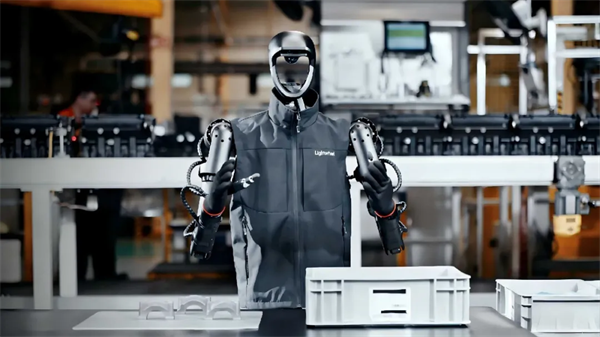
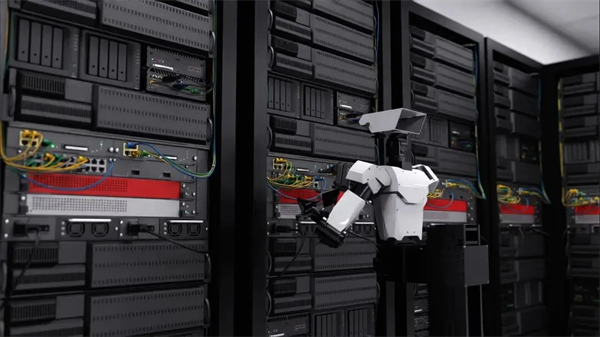
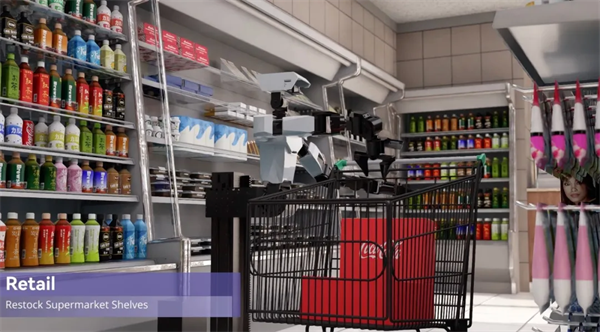
On this year's China Central Television Spring Festival Gala, humanoid robots palmed walnuts, folded clothes and skewered sausages with smooth, delicate movements. Behind this spectacle blending art with technology lies a key secret: vast quantities of high-quality training data and advanced simulation technologies that allow robots to learn complex real-world actions.
But who provides the data, and how can it be delivered efficiently? Recently, Guanglun Intelligence (Beijing) Technology Co., Ltd. ("Lightwheel AI" for short), a physical AI simulation infrastructure company based in Beijing's Haidian District, offered an answer. The two-year-old startup has announced the completion of 10 billion yuan in A++ and A+++ funding rounds. What makes the company unique is that it does not manufacture robots. Instead, it builds a "data factory" for robot companies.
A "Virtual Training Ground" for Robots
Imagine how long it would take to teach a robot to tighten a screw in the real world. If mistakes occur, equipment may be damaged; if extreme conditions arise, there is little opportunity for safe practice.
Lightwheel AI's solution is to build a "digital parallel factory" in the virtual world. Within this environment, robots can train thousands of times in parallel, under a wide range of simulated extreme conditions — from temperatures as low as -40°C to heat exceeding 1,000°C, and from smooth glass surfaces to rugged mining terrain.
"It's similar to how pilots train in flight simulators," explained Yang Haibo, co-founder and president of the company. "Robots can make every possible mistake in a virtual environment first. Once they enter the real world, they're much more reliable." The system reduces traditional robot development cycles from three to six months to just two to three weeks, while cutting overall training costs by more than 90 percent.
Three Interlocking Capabilities
Powering this "data factory" is a three-layer capability system built by Lightwheel AI. The first layer is "simulation". Lightwheel AI is currently the only company in the world that has independently developed its own physics solver, which enables highly precise multi-physics simulations. In simple terms, the system can realistically replicate real-world physical laws — gravity, friction, collisions and deformation — within a virtual environment.
The second layer is "data". Lightwheel AI has developed the world's largest non-ontology data engine covering synthetic data and human video data. Today, more than 80 percent of the world's leading embodied-AI teams are using its data to train their robots.
The third layer is "evaluation". Lightwheel AI has built RoboFinals, the world's first industrial-grade simulation evaluation platform for robotics. Much like a "Robot Olympics", the platform objectively assesses the real capabilities of different robots and is becoming an industry benchmark.
Together, these three layers create a self-reinforcing "data flywheel". The more robots train on the platform's data, the higher the data quality becomes — and the higher the quality, the more companies are attracted to use it.
Partnerships with Top Industry Players
The company's technological edge has quickly translated into market success. Lightwheel AI has won the global delivery champion in three dimensions: synthetic data, simulation evaluation, and human video data. It is the only company to achieve full coverage across all three areas.
Its partner list reads like a who's who of the tech industry, including ByteDance, Alibaba, AGIBOT, and Galbot. The world's top three world model research teams have all partnered with the company.
More importantly, Lightwheel AI is helping to define industry standards. The company has collaborated with NVIDIA to establish physical and engineering standards for simulation assets and jointly release an open-source benchmark framework for embodied intelligence evaluation. It also works closely with Fei-Fei Li's startup World Labs to build the world's first scalable evaluation system for embodied AI. In addition, Guanglun Intelligence has partnered with Alibaba Qwen to build a reproducible, diagnosable industrial-grade evaluation closed loop, advancing the establishment of an industry foundation for embodied AI evaluation.
Meanwhile, the company's self-developed LeIsaac simulation workflow has been included in the official documentation of Hugging Face, the world's largest open-source AI community, becoming a "standard simulation toolkit" used by millions of developers worldwide.
Tenfold Revenue Growth and Explosive Commercial Potential
Technological leadership has brought tangible financial returns. In 2025, the company achieved tenfold revenue growth. It expects that first-quarter revenue in 2026 alone will surpass the company's total revenue for all of 2025.
The latest financing round was completed just two months after the previous round, attracting top-tier industry investors including New Hope Group, Dingbang Innovation, AUX Group, and Capstone Captial Management limited, as well as government-backed funds such as JIC Technology Investment and Guofang Innovation. The new funding will support continued R&D of the company's physics simulation engine, upgrades to large-scale model evaluation systems, and the enhancement of global delivery and localized deployment capabilities.
Industry analysts predict that leading humanoid robot manufacturers could deliver tens of thousands of units in 2026, with annual sales potentially exceeding 100,000 units. Once that scale is reached, demand for training data is expected to surge again.
"2026 will mark the first year of large-scale application of embodied intelligence data," said Yang Haibo. "Our goal is to provide simulation-centered physical AI infrastructure for the industry, enabling robots to move beyond laboratories and into factories, hospitals and homes."
From the spotlight of the Spring Festival Gala stage to the production lines of factories, robots are rapidly transitioning from "performers" to "real-world workers". And Lightwheel AI's AI data factory is providing the critical "fuel" for this new wave of industrial transformation.