On Nov. 18, the HICOOL 2026 Global Entrepreneurship Competition OPC Accelerator Camp (Beijing Haidian) opened at the Zhongguancun AI North Latitude Hub. More than 60 "One-Person Company" (OPC) entrepreneurs entered the camp with their projects. The accelerator camp connects them with policies, capital, industry scenarios, and landing services, driving the journey from "inspiration" to "product" and from "prototype" to "market."
This year, the HICOOL Global Entrepreneurship Competition innovatively built a "one main competition plus three specialized competitions" system, establishing an OPC special competition for the first time targeting this type of entrepreneurial format. Among them, the Haidian District OPC special competition focused on three directions: AI-native technology and agents, AI vertical scenario empowerment, and AI + hard tech and frontier innovation. From more than 200 participating projects, two "OPC Supernovas" and five "OPC Rising Stars" were selected.
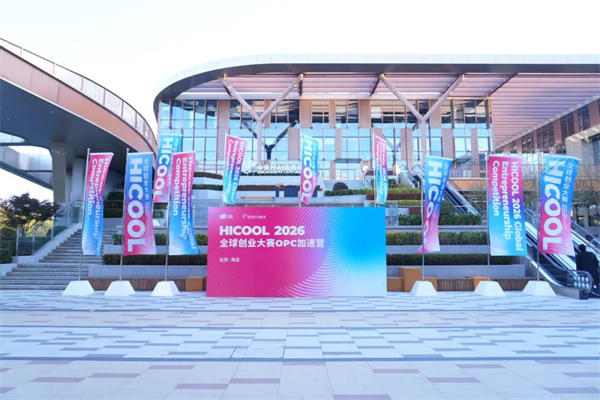
The special competition focuses on discovery, while the accelerator camp focuses on cultivation. The OPC Accelerator Camp (Beijing Haidian) is co-hosted by the Beijing Overseas Talents Association and the Zhongguancun AI North Latitude Hub, with support from the Beijing Private Equity Association. It brings OPC projects into the entry point of policies and services, and into the front lines of capital and industry, helping projects go more steadily and further.
The first stop of the accelerator camp began with policies and services, providing startup support for OPC as an emerging entrepreneurial format. A relevant person in charge from the Haidian District Local Financial Supervision and Administration Bureau gave a detailed interpretation of Haidian District's sci-tech insurance subsidy policy, including three types of insurance subsidies—inclusive comprehensive sci-tech insurance, premium subsidies for growth-stage enterprises, and premium subsidies for key frontier fields—as well as a loan-insurance linkage financing mechanism, providing subsidies, sharing risks, and encouraging innovation for early-stage and growth-stage enterprises and sci-tech enterprises in frontier fields such as artificial intelligence.
Policies and services provide the foundation, but for a project to develop in the long run, ultimately it depends on its own competitiveness in the commercial and capital markets. Fan Xinyuan, general manager and partner of Beijing Haibei Capital Investment Management Center (L.P.), gave a speech titled "From 'One Person' to 'A Company': How Capital Judges the Investment Value of OPC Projects," sharing from a frontline investment perspective a multi-dimensional evaluation logic for OPC projects, including track space, the founder's industry experience and execution ability, and whether scenario barriers can support replicable growth. Li Mingxuan, CEO of Beijing Jimu Lingyu Technology Co., Ltd. and specially appointed entrepreneurship mentor for the MBA program at Beihang University, proposed that OPC, as a new business organization form, will have its future barriers in vertical field professional judgment, user trust, and task authorization.
At the venture capital matching session specially set up at the accelerator camp, projects in directions such as AI-native technology and agents, AI vertical scenario empowerment, and AI + hard tech and frontier innovation took turns on the roadshow stage, exchanging views with guests on technical routes, application scenarios, business models, and financing needs, further clarifying development ideas through dialogue and further connecting with venture capital opportunities on site.