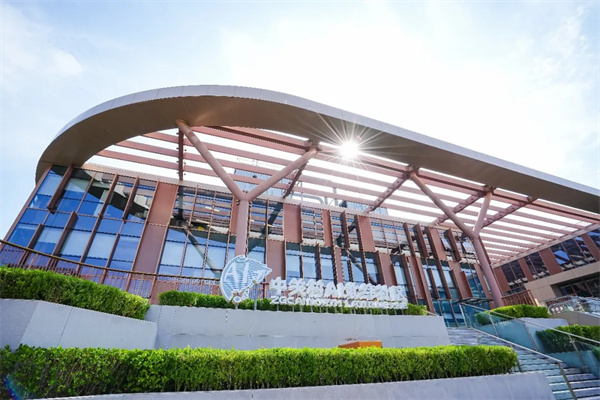
At the Zhongguancun AI North Latitude Hub, a group of people is answering a question: how far can a solo founder go.
Most of them started out on their own—one person, one laptop, one workstation, and that was a company. This form is called a "One Person Company" (OPC).
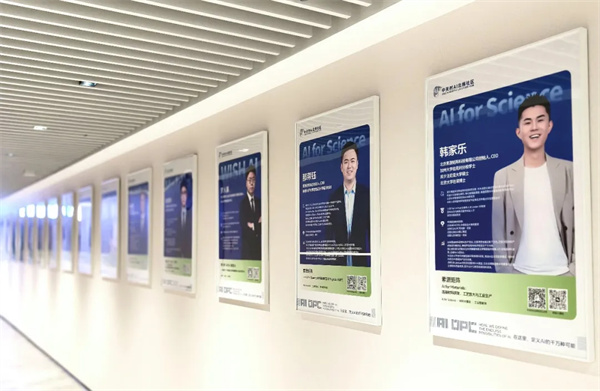
The Zhongguancun AI North Latitude Hub runs an AI OPC Accelerator. Across its first three cohorts, 72 teams have graduated, sharing one name: North Latitude alumni. By the time they leave, most have a deliverable product in hand and take it to market as a one-person company.
On November 26, we will invite them back to North Latitude—back to where they set out.
One Person, Starting from a Single Workstation
What the accelerator does is simple to describe: it catches one person.
When many first arrive, they have only an idea and a demo. No team, no office, no idea how to price a project, and no idea where their first client is.
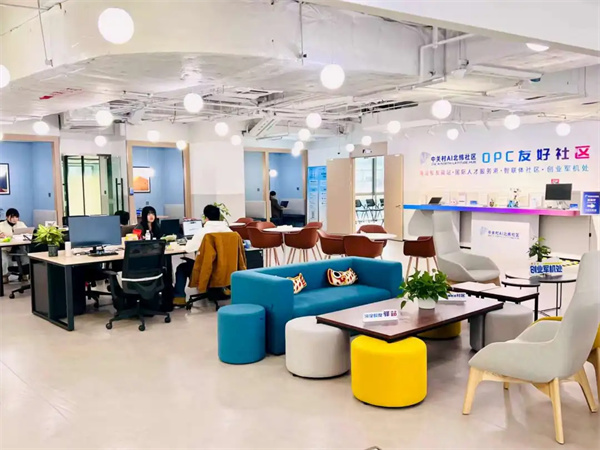
The first thing addressed here is all the things that make it impossible to run a company alone. A 2,000-square-metre shared space in the first phase frees them from worrying about office space. Computing power support keeps R&D costs down, so one person can still run models. Business registration, company setup, and other matters that otherwise require visiting service windows, filling out forms, and finding intermediaries are handled by the community—saving the time that startups can least afford to lose.
Across three cohorts, more people came in. By the time they left, most had a deliverable product and more confidence to keep the company going.
In the Past Year, They Reached Competitions and Orders
The most direct way to find out whether what one person builds actually works is competition.
In the "Maker Beijing" OPC special track, nine places were decided citywide; North Latitude alumni took four, including the only first prize of the entire competition. In the Global Internet Competition of "Straight to Wuzhen," all three projects that reached the finals stood on the podium. Participants from the first three cohorts also won honors in "Startup Beijing," HICOOL, the Migratory Birds 300 Hackathon, and other competitions.
More concrete than trophies is the question of where orders come from.
The accelerator's roadshows are the first fork in this road. In the audience, alongside judges, sit investment institutions and industrial capital. They are in no hurry to put money in; first they look at whether the product is usable. After seeing it, some institutions begin to follow up, and market orders and contracts gradually take shape.
The second fork is scenarios. The community lays out the open lists of application scenarios it has accumulated over the years: local Haidian scenarios, scenarios from other Chinese cities, and those of lead enterprises. Whatever matches your product, you discuss face to face.
The third fork lies among peers. When an alumnus cannot take on a project alone, it is split among teams upstairs and downstairs that can do the work. Demand in the ToB Club is also often absorbed internally. Work one person cannot handle becomes work several people share.
These things were later seen by more people. China News Service wrote about them under the headline "Partners on the Screen." CCTV's Xinwen Lianbo, in its "Vitality China Research Tour," turned its cameras on the community's industry-academia-research corridor, saying that "more than 100 'AI+' ideas are becoming reality there." Later, People's Daily, Economic Daily, Beijing Daily, South Korea's KBS, and Singapore's Lianhe Zaobao visited in succession.
Being seen is the result. What actually happened is this: what one person builds has begun to find paying customers.
Behind One Person, There Is Now a Crowd
For a solo founder, the hardest part is often not in the code.
To move technology upward, you need to know where the source is. As a "Haidian Alumni Station," the community is connected to a network of 37 universities and sits next to the Zhongguancun Academy. Laboratory results and people who can sit down and work with you are all on this network.
For a company to move forward in compliance, someone has to handle the things one person cannot. Legal affairs, finance and taxation, financing—the community provides ready-made "external brains," so there is no need to support a whole team for these functions.
When you hit a bottleneck, you need someone you can ask. More than 200 AI companies currently operate here, many of them one-person companies, with peers upstairs and downstairs. How to revise a contract clause, how to quote a client—you can knock on a door and ask.
The Zhongguancun AI North Latitude Hub is located in the core of the northern part of Zhongguancun Science City. The surrounding Xibeiwang Town, where the hub is located, is home to more than 17,000 enterprises and 27 listed-company headquarters, and hosts 14 industrial parks including Zhongguancun No.1 and the Integrated Circuit Design Park (IC PARK). It focuses on four major industries: artificial intelligence, commercial space, integrated circuits, and medicine and health.
For a solo founder, this means customers, suppliers, and application scenarios are most likely within the same town—no need to go to other cities to find them.
What the locality provides is not just space. The industrial density of Xibeiwang is the precondition for this community to grow an alumni network.
November 26: Come Back to North Latitude
Over the past year, projects have gathered, alumni have returned, and we have linked more ecological partner resources in the AI circle.
So we are holding a gathering and inviting everyone back.
On November 26, the 2026 Zhongguancun AI North Latitude Hub OPC Alumni Innovation Day. The daytime features a themed conference; the afternoon, parallel forums and project roadshows; an alumni innovation exhibition runs all day; and the evening brings Alumni Night. The full agenda and the registration link are in the long poster at the end of this article.
This day is not about grand narratives. It does three things: make clear what has happened over the past year, put resources that can be connected on the table, and bring old and new friends together.
Bring your project, bring your needs, and bring what you have learned along the way.
On November 26, come back to North Latitude.