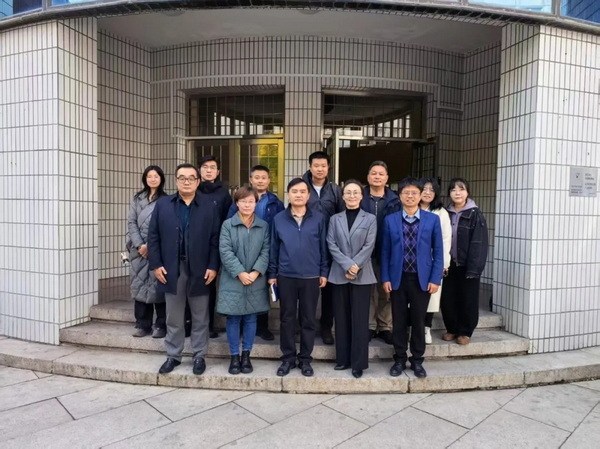
To clear the bottlenecks along the whole chain of university technology transfer, give full play to the talent and think-tank strengths of democratic parties, and help Beijing Institute of Technology (BIT) hard-tech results take root in Haidian, the Haidian "Five Parties, Six Forces" BIT Working Group convened a meeting with the BIT Committee of Jiusan Society on Nov. 13. Fifteen people attended, including Li Ning, deputy director of the United Front Department of the CPC Haidian District Committee; Hei Yu, director of the Comprehensive Bonded Zone Division of the Administrative Committee of Zhongguancun Science City; Qin Lingdong, deputy secretary of the Party Working Committee of Zizhuyuan Subdistrict; Yang Haifang, full-time vice chairperson of the Haidian District Committee of Jiusan Society; and Zhong Haizheng, chairperson of the BIT Committee of Jiusan Society. The participants held in-depth exchanges on university-locality coordination, talent training, project implementation and resource coordination, discussed several pilot measures, and explored a new model of university-locality coordinated technology transfer under "Five Parties, Six Forces."
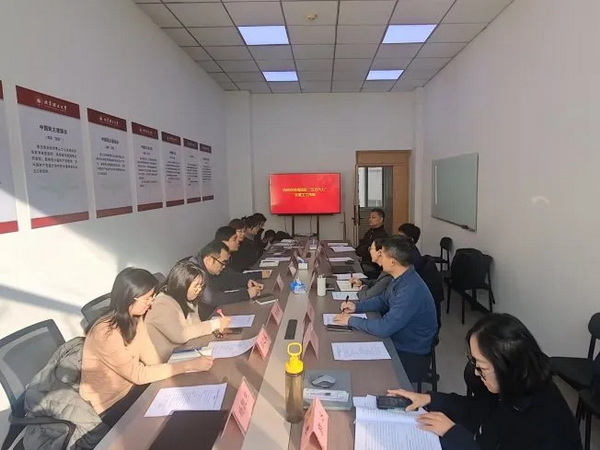
At the meeting, Hei Yu systematically introduced the early practical results of the “Five Parties, Six Forces” mechanism. Launched by Haidian District, it relies on the natural bond of "alumni reaching out to alumni" to link resources on campus quickly. The working group then laid out Haidian's "Five Parties, Six Forces" policies — support across basic services, funding and talent, over the full cycle so that university innovation projects can move smoothly from lab to market.
Zhong Haizheng described the committee's own development and its work on technology transfer. The BIT Committee of Jiusan Society has 63 members, among them leading talents, outstanding young researchers, and distinguished teachers — a large pool of highly educated sci-tech talent. It also runs the FSP science popularization club, which uses a model in which professors guide undergraduates and undergraduates go into middle schools to teach, so that innovation and science outreach reinforce each other.
On the practical pain points of university technology transfer, Zhong Haizheng set out three cooperation requests on the committee's behalf. He hopes BIT can serve as a pilot to refine a replicable model that can later roll out to other universities in the region. First, explore a joint BIT entrepreneurship and innovation club. Given that teachers find it hard to start businesses on a full-time basis and students worry about job security and hesitate to join startup projects, the club would find and nurture core student founders. Second, hold regular closed-door meetings on technology transfer, inviting heads of innovation projects at different stages to share their experience, review how their projects grew, and discuss practical problems. Third, plan an international journal platform for science and technology communication. Drawing on Haidian's innovation resources and the Jiusan Society's expert pool, and benchmarking leading international popular-science journals, it would build a technology communication platform that can speak with international authority and help innovation companies raise their profiles.
The participants responded on the spot. Qin Lingdong said the Zizhuyuan Subdistrict will provide services across business development and daily life, coordinating on site renovation, company paperwork and living support for talent, to support faculty and students through innovation and entrepreneurship. The working group proposed folding the closed-door sessions into BIT's existing "Five Parties, Six Forces: Lixianghui" brand of events, using a mature format to amplify their effect. Yang Haifang said the Haidian District Committee of Jiusan Society will gather technology-transfer needs from universities at its own level, actively link resources from all sides, and help the pilot model iterate and improve. Li Ning said the district's united front system has deep ties with BIT and will play its bridging role, connecting with grassroots democratic-party organizations at universities and providing services for experts and innovation projects. Hei Yu responded on policy alignment and delivery of resources.
Universities are the source of innovation, and democratic parties hold a large reserve of sci-tech talent. Next, the working group will deepen coordination among the united front, universities, subdistricts, capital and carriers, turn talent and research strengths into industrial strengths, and speed up the creation of more replicable models of university-locality integration in technology transfer, injecting strong innovation momentum into Haidian's development of new quality productive forces.