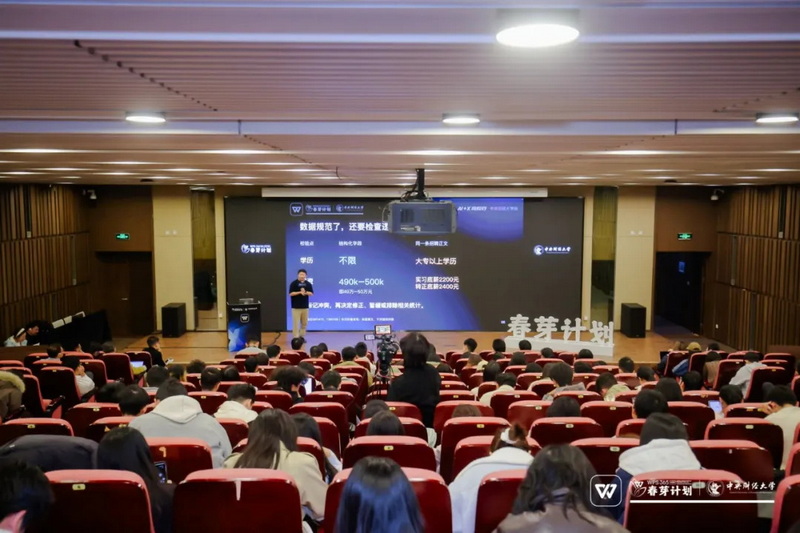
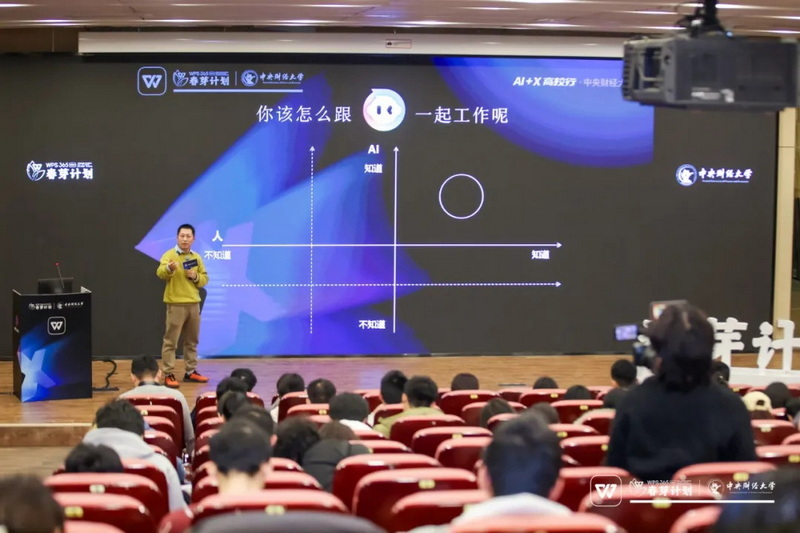
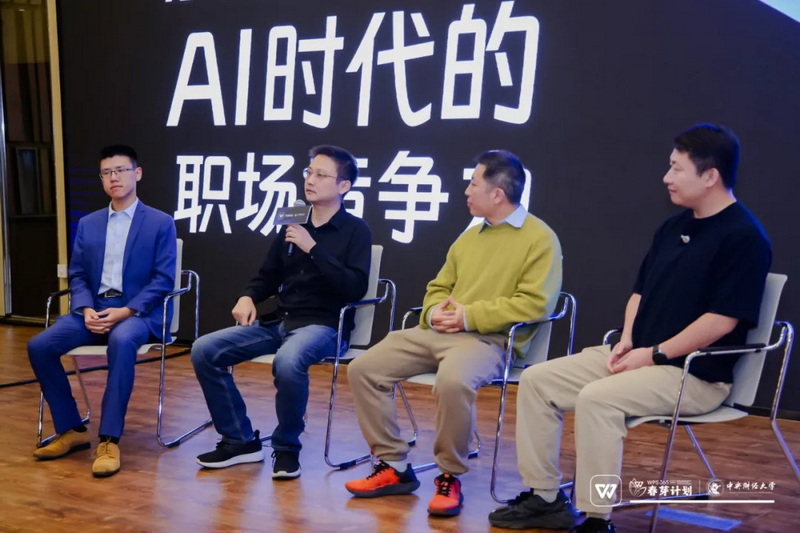
An old resume is projected on screen. After a few rounds of dialogue with AI, a career direction begins to come into focus. Kingsoft Office's “Chunya Plan” AI+X Campus Tour made its second stop at the Central University of Finance and Economics, where it partnered with the Cai AI Salon for a session on "workplace competitiveness in the AI era." Guests used an old resume, recruitment data and office agents as examples to show students what abilities the AI era demands.
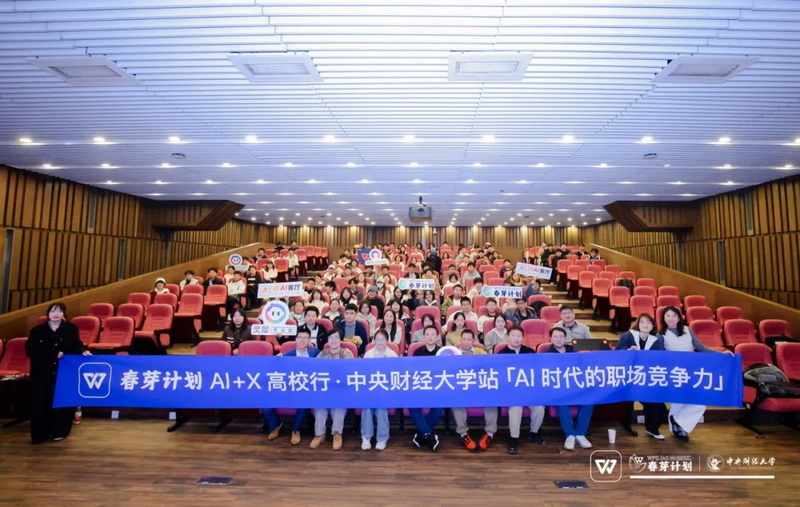
According to the company, Kingsoft Office launched the “Chunya Plan (WPS 365 Intelligence Office Project for the Education Industry)” in 2025 as a long-term strategy for education. It builds a cloud platform for industry-education integration, embeds digital tools such as document collaboration and smart spreadsheets into practical training, and links skills training to industry demand. The Chunya Plan covers five settings — basic education, vocational education, higher education, lifelong learning and overseas education — and focuses on industry-education coordination, teacher development, AI talent training and job matching, and the implementation of AI innovation.
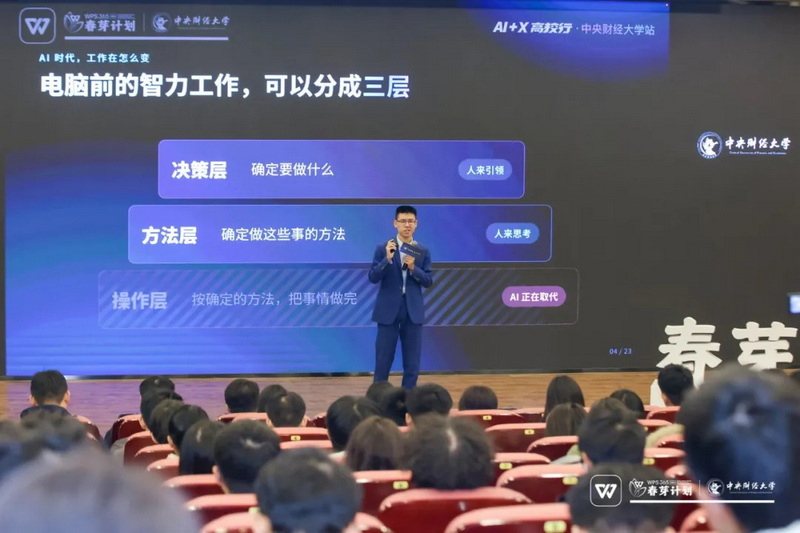
Under that strategy, the Chunya Plan keeps moving. Since the start of this year it has visited universities including Zhejiang University and Tsinghua University. The stop at the Central University of Finance and Economics tied career planning, job analysis and the use of office agents together, helping students build real problem-solving ability through the tools.
At the event, Du Sikang, curator of the Cai AI Salon and an alumnus of the School of Information at Central University of Finance and Economics (class of 2012), used one of his own old resumes to simulate the job-hunting situation of a fresh graduate. Through several rounds of questions and answers with AI, he worked through his experience, interests and real constraints one by one, showing how a conversation can clarify a career direction. He also cautioned that any direction AI suggests still has to be tested in practice.
Beyond career planning, professional judgment also shows in how data is interpreted. Liu Xu, a trainer in data and AI, walked through a university careers-guidance case: AI makes it noticeably faster to sort job postings and analyze pay and skill requirements, but pay-calculation conventions, job categories and outliers still need human checks. A demonstration with WPS Lingxi and multi-dimensional tables showed that reliable analysis depends on professional knowledge and clear standards.
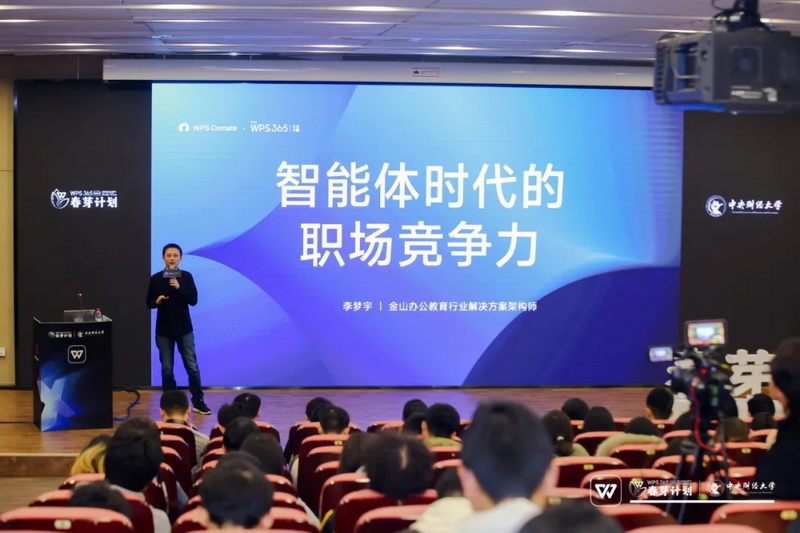
Moving from individual analysis to organizational collaboration, Li Mengyu, Kingsoft Office's education-industry solutions architect, used WPS Comate to explain that in real settings, business documents, data, systems and permissions together form the context of a task. Users need to turn a business need into a concrete task and spell out the expected output and acceptance criteria, which is a key foundation for human–machine collaboration.
In hands-on terms, Zheng Xueqian, a Kingsoft Valuable Professional (KVP) and a WPS star instructor, used resume writing, file organization and sales data analysis as examples to show how WPS Lingxi helps generate editable documents, spreadsheets and interactive dashboards. From preparing materials to checking results, AI is applied to concrete tasks and gives students a reference for their own project work.
"I used to think AI just helped you write things. Today I went through the resume case, and I realized the key is still knowing what to ask and how to judge the answer," one student at the event said.
Another student said: "The Chunya Plan brings real workplace scenarios onto campus. That is more useful than simply explaining how to use a tool, and it makes clearer which abilities I still need to build."
That is why Kingsoft Office keeps bringing its Chunya Plan into universities. "The Chunya Plan is not about dropping tools onto campus. It is about bringing real industry scenarios, job standards and company experience into the classroom," said Wu Qingyun, vice president of Kingsoft Office. Deep involvement by companies brings education closer to industry needs, so that practical training lines up with technological change and job standards, he said. School-enterprise cooperation also helps companies build a talent pool and sharpen their competitiveness — "so that what schools teach is closer to what students will actually use."