On August 25, Forbes Asia officially released its 100 to Watch 2025 list, spotlighting startups with the highest growth potential across the Asia-Pacific region. This year's list covers 16 countries and regions and 100 high-growth enterprises from 10 major sectors including artificial intelligence, energy technology, and high-end manufacturing.
A total of nine companies from the Chinese mainland were selected, among which two are based in Haidian. Both companies are deeply engaged in the hard tech sector, breaking international monopolies with ground-breaking technological innovations, representing the rise of China's new quality productive forces on the global stage.
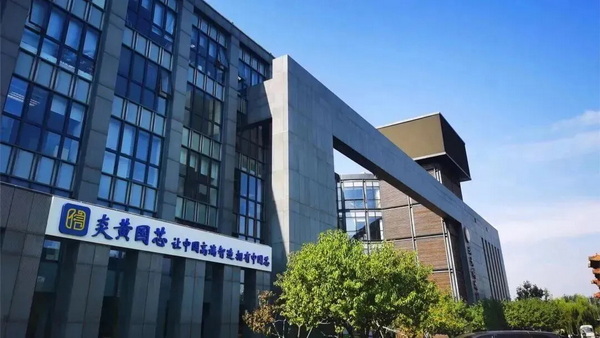
Founded in October 2016, Beijing Yanhuang Guoxin Technology Co., Ltd. is headquartered at Peking University Science Park. It is a national high-tech enterprise and a national-level "little giant" enterprise. The enterprise focuses on high-reliability power management chips, breaking through 30 years of international technological barriers in key fields such as the aerospace and nuclear industries. It has completed financing of over 300 million yuan, and its products empower national strategic equipment including satellites and nuclear power projects, demonstrating the strength of China's chip industry.
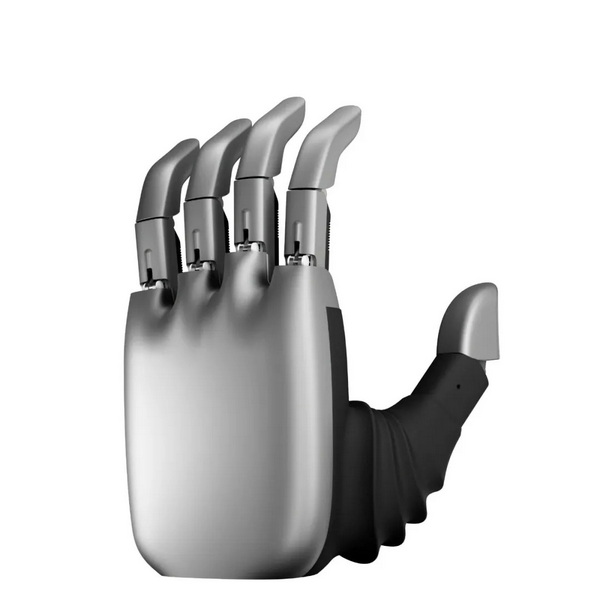
Founded on July 6, 2023, Linkerbot (Beijing) Technology Co., Ltd. is headquartered at Dazhongsi, Haidian District. The enterprise specializes in embodied intelligence solutions for dexterous manipulation, holding more than 80% of the global market share for high-degree-of-freedom dexterous robotic hands. Its products are used by laboratories including those of Stanford University, the University of Cambridge, Tsinghua University and Peking University, as well as enterprises such as Honor, ZTE, Midea and Foxconn.
The inclusion of the two Haidian companies not only reflects the region's strong innovation prowess but also epitomizes China's high-quality development driven by sci-tech innovation. In its comments, Forbes Asia repeatedly emphasized "original technological innovation" and "market scarcity", making it increasingly clear that Chinese enterprises are shifting from "model innovation" to "hardcore innovation".
Just as Yanhuang Guoxin has spent a decade breaking the chip monopoly, and Linkerbot has set new global standards for dexterous robotic hands, both embody the ambition of Chinese innovators to transition from followers to trendsetters.