Science classes in Haidian District's primary and secondary schools are "moving" into national-level laboratories and tech companies. The 2026 Haidian Junior Academy of Science student research series has begun rolling out classes, organizing students to visit research institutions such as the Institute of Geographic Sciences and Natural Resources Research, Chinese Academy of Sciences (CAS), where they will unlock scientific mysteries through experimental exploration and teamwork, and experience the warmth of science through "learning by doing."
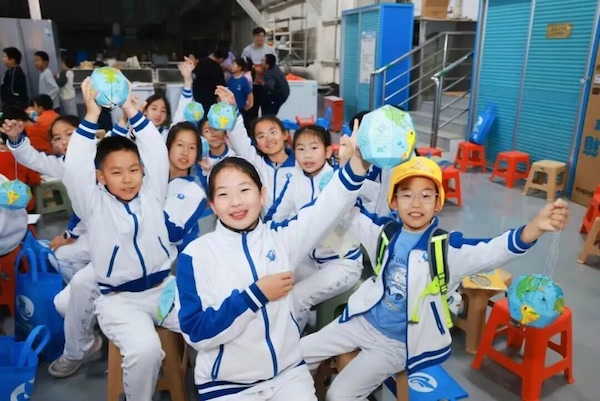
Past science outreach activities held by the Haidian Junior Academy of Science.
The event is organized by the Haidian District Youth Science and Technology Activity Center (hereinafter referred to as the "Science and Technology Center"), in collaboration with multiple CAS institutes and tech companies, transforming national key laboratories and frontline research sites into vivid second classrooms. The research content covers computer science, aerospace, geography, artificial intelligence, mechanics and other fields, guiding students through the full research process of "discovering problems, hands-on practice, and debugging and iteration."
The Science and Technology Center will give full play to regional resource advantages, organizing young people to visit research sites including the Institute of Computing Technology of CAS, the National Space Science Center of CAS, the Institute of Geographic Sciences and Natural Resources Research of CAS, and the Institute of Mechanics of CAS, to explore national key laboratories; and to visit tech companies such as the iFlytek Science Popularization Research Institute to experience the practical application of cutting-edge technologies such as artificial intelligence.
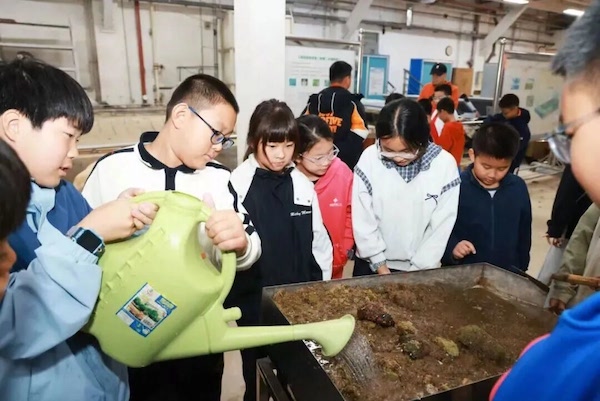
Past science outreach activities held by the Haidian Junior Academy of Science.
Students will communicate face-to-face with research experts and sci-tech workers, turning frontline research sites into learning scenarios. For example, at the Institute of Geographic Sciences and Natural Resources Research of CAS, students will conduct wind tunnel simulation experiments and soil erosion experiments under the guidance of research mentors; at the Institute of Computing Technology of CAS, experts will give a lecture titled "The Evolutionary Diary of Computing Tools," leading students through fun games such as "binary counting" and "human logic gates."
As the research activities roll out, Haidian District will continue to pool high-quality science and education resources, build professional platforms for science and innovation practice, and stimulate young people's curiosity and creativity in exploring science.