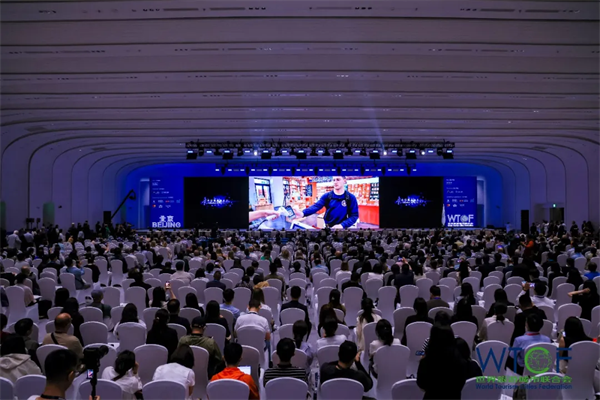
On June 2, the 2026 WTCF Beijing Fragrant Hills Tourism Summit opened at Zhongguancun International Innovation Center in Beijing. Hosted by the World Tourism Cities Federation (WTCF) and jointly organized by the Beijing Municipal Bureau of Culture and Tourism and the People’s Government of Haidian District, Beijing, the summit was supported by a number of international tourism organizations, including the UN Tourism, Pacific Asia Travel Association (PATA), World Travel & Tourism Council (WTTC) and Global Tourism Economy Forum (GTEF).
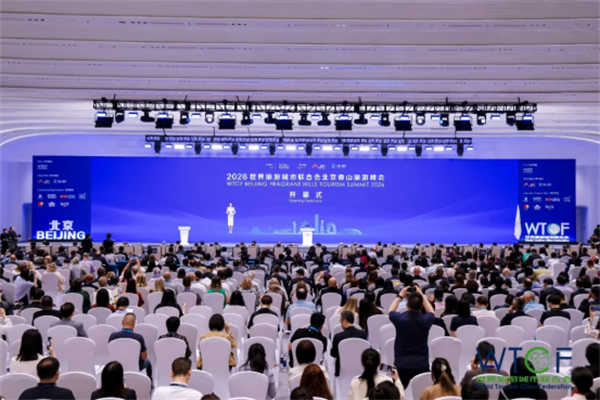
Themed “Smart Tourism Better Future”, the summit held a series of activities including the General Assembly, Council Meeting, Opening Ceremony and exhibitions. The summit attracted representatives from 56 countries and regions and 73 cities across the globe, gathering 2 Deputy Ministers of Tourism of foreign countries, 5 heads of international organizations and 23 mayor-level guests from overseas cities in Beijing. Participants included city members, institutional members, international organizations, cultural and tourism enterprises, experts, scholars and media professionals, who discussed the transformation trends and development strategies of the global cultural and tourism industry in the digital & smart era. Relying on the organizational advantages of the WTCF as an international platform and leveraging Beijing’s strengths as an international exchange center and national cultural center, the summit built a high-level, wide-ranging and international platform for cultural and tourism exchanges and cooperation. Guests from all walks of life gathered in the Dual-Olympic City to discuss new paths for the high-quality development of the cultural and tourism industry.
Forging Global Consensus: From a “Choice Question” to an “Imperative Question” for the Industry
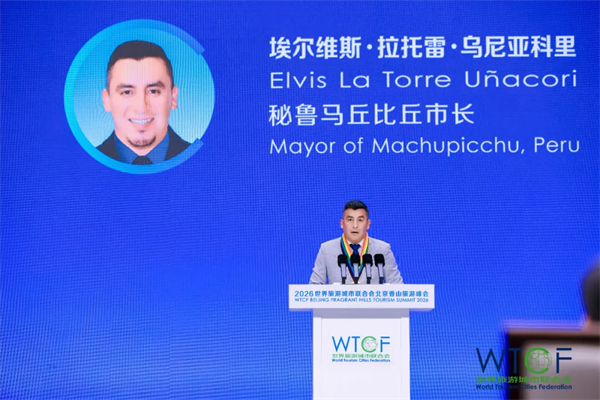
At present, the integration of digital and smart technologies with the cultural and tourism industry is accelerating. How to adapt to the wave of digital and smart transformation and seize the opportunities for the development of future tourism has become a core topic of common concern for the global tourism industry. This summit puts forward the brand-new concept of “Future Tourism” for the first time, which precisely aligns with the general trend of the era featuring the in-depth integration of the digital economy and culture-tourism. It forges industrial consensus and charts a development blueprint for the digital and smart transformation of tourist cities worldwide. During the opening ceremony, attending guests conducted in-depth discussions and shared experiences around the theme of “Smart Tourism Better Future”. Elvis La Torre Unacori, Mayor of Machu Picchu, Peru, stated that tourism is an important driving force for the coordinated development of economy, society and culture. It not only unleashes the vitality of economic development, but also builds a bridge for people-to-people exchanges between Beijing and Machu Picchu of Peru, continuously promoting the exchanges and mutual learning of civilizations between the two places. As world-renowned benchmarks of world heritage, the Great Wall and Machu Picchu also urge all parties to join hands in the protection and dissemination of cultural heritage.
Gloria Guevara, Chief Executive Officer of the World Travel & Tourism Council (WTTC), stated in her address that the number of international inbound tourists to Beijing increased by 15.8% year-on-year in 2025, more than three times the global average growth rate. The global tourism economy grew by an average of 4% last year, while China led the world with a 9.9% increase, more than twice the global average. Gloria Guevara also noted that the WTTC has devoted itself to quantitative research on the cultural and tourism industry. Data proves that tourism, based on professional research findings, participates in policy consultation and industry promotion, collaborates with governments and cities around the world, continuously expands employment channels for the industry, attracts industrial investment, and fully unlocks the economic potential of the cultural and tourism industry.
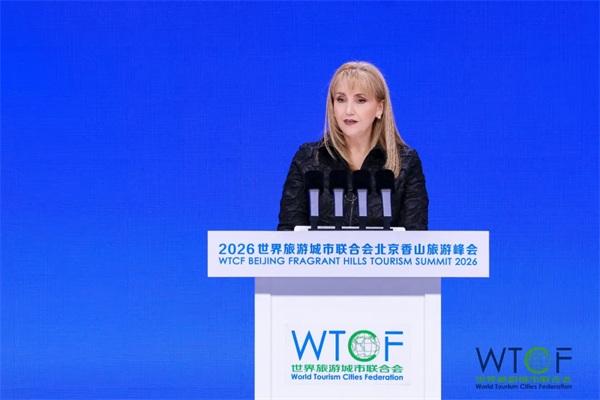
She pointed out that last year witnessed the strongest momentum of development for the global tourism industry, with the total economic volume of the sector reaching 1.6 trillion US dollars, equivalent to RMB 78.5 trillion. Meanwhile, the employment data of the tourism industry is also remarkable. One out of every three new jobs created globally in the past five years came from the travel and tourism industry, highlighting the industry’s prominent role in boosting employment.
Digital and Smart Transformation Has Become a Key Yardstick for Measuring the Core Competitiveness of World Tourism Destinations — Official Release of the “2026 Global Smart Tourism Destination Competitiveness Report”
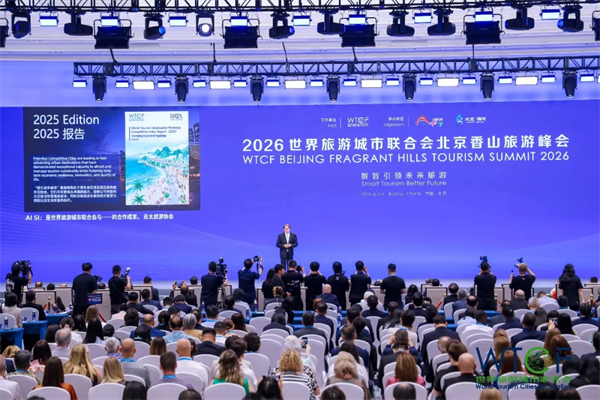
The “2026 Global Smart Tourism Destination Competitiveness Report”, compiled by the World Tourism Cities Federation (WTCF) in conjunction with the Pacific Asia Travel Association (PATA), was grandly released. John Sim, Chairman of PATA, interpreted the core content of the report on site. From the perspective of digitalization and artificial intelligence development, the report conducted a systematic and comprehensive evaluation of key tourism cities worldwide from multiple dimensions including digital infrastructure layout, smart application implementation and data service construction. It released the Global Top 10 Digital Tourism Leading Cities list, with Beijing ranking first. With professional judgments and empirical analysis, the report provides an important reference and practical model for the digital and smart transformation and high-quality development of tourism cities around the world.
Technology Illuminates the Future of Culture & Tourism — Release of “Beijing’s top 10 technology application scenarios in the culture and tourism sector”
At present, artificial intelligence (AI), big data and smart infrastructure have become the fundamental support for the development of the cultural and tourism industry, and are deeply integrated into all links including cultural and tourism planning and layout, brand marketing and promotion, full-process tourist services and dynamic passenger flow control. The recently released Beijing’s top 10 technology application scenarios in the culture and tourism sector deeply integrate cutting-edge digital technologies such as AI and big data. It covers diverse business forms including robotic smart services, AI residence butler, contactless and convenient access, digital revitalization of cultural relics, XR immersive performances and AIGC-powered personalized content customization. Stretching through the entire cycle of tourist travel and the whole chain of cultural and tourism operations, it fully demonstrates the foundation and hard power of Beijing’s digital cultural and tourism development.
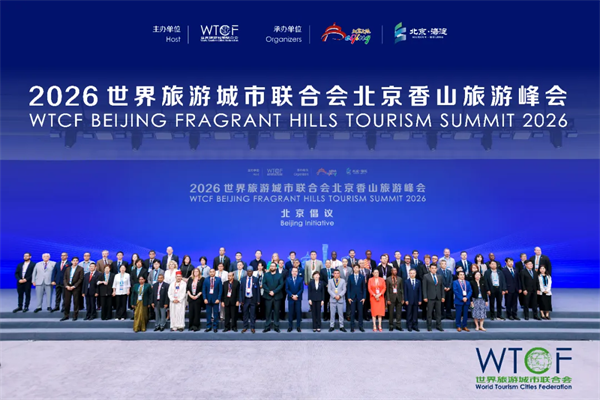
Forging Global Consensus to Chart a New Blueprint for Digital & Smart Tourism — Official Release of the “Beijing Initiative”
During the summit, the World Tourism Cities Federation (WTCF) held a new member admission ceremony. Eleven cities and institutions officially joined the WTCF family, including Anibare District, Aqaba, Bishkek, Brezno, Latacunga, Yichang, Ziguinchor, Shah Tourism Company of Tajikistan, Nordic Fantasy Travel, Tamai Travel of Spain and Visa Inc. The newly admitted members jointly initiated the “Beijing Initiative”, which not only continuously expands the global “circle of friends” of the Federation, but also fully reflects the wide recognition and collective consensus of the global cultural and tourism industry on the development direction of “Smart Tourism Better Future”.
Initiated and founded by Beijing, the World Tourism Cities Federation (WTCF) is the world’s first international tourism organization with cities as its main members. It currently has 263 members covering 89 countries and regions worldwide. As an annual flagship event, the Fragrant Hills Tourism Summit epitomizes its mission: to take the summit as a window, to let the world understand Beijing; and to take tourism as a bridge, to connect China with the world.