District-Level Intangible Cultural Heritage Items in Haidian:
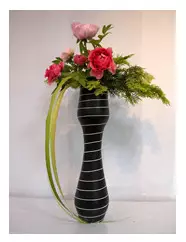
Traditional Chinese Flower Arrangement
Traditional Chinese flower arrangement can be categorized into four major types based on practitioners: folk, temple, court, and literati styles. The primary containers fall into six categories: vases, plates, bowls, baskets, jars, and tubes. The arrangement consists of floral materials, containers, flower holders, stands, baseboards, and accessories. This art form dates back to the Spring and Autumn and Warring States periods, with a history of more than 3,000 years.
Features:: Throughout its formation, influenced by traditional Chinese philosophy, literature, painting, gardening, folklore, and other factors, it has developed unique styles and features such as reverence for nature, richness in poetic and artistic imagery, expertise in line-based modeling, and frequent use of asymmetrical compositional forms. It embodies distinctive traditional Chinese culture and has profoundly influenced Japanese Ikebana as well as modern Western flower arrangement.
Inheritors: Wang Lianying, Qin Kuijie
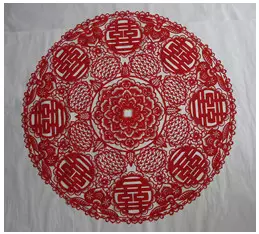
Circular Pattern Paper-Cutting
Paper-cutting, also known as paper carving, is an art of openwork carving. It is one of the oldest folk arts of the Han Chinese. It is widely practiced thanks to its simple tools, convenient techniques, and diverse themes.
Features: The works are known for their exquisite and delicate beauty. Circular patterns (tuahua), animals, and various traditional mascots are frequently used as creative themes, giving the art a strong folk artistic style. Representative works such as Bright Future (Qiancheng Si Jin) and Boundless Blessings (Fu Man Qiankun) have won awards at international paper-cutting art exhibitions on multiple occasions.
Inheritor: Zhang Fengqin
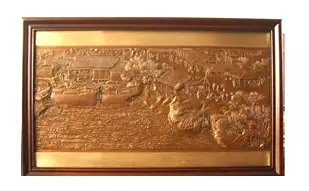
Metal Forging and Chiseling
Metal forging and chiseling is a technique that uses metals such as gold, silver, and copper as materials, employing nearly 40 complex processes including forging and chasing to create works of art.
Features: Historically, these works were primarily used in ancient court life and palace decoration. They hold significant research value in fields such as history, culture, art, and folklore. Representative works, including exquisite copperplate pieces like Along the River During the Qingming Festival and Lady Guoguo's Spring Outing, have garnered widespread attention.
Inheritor: Jin Zengming
Dough Figurine Tang Style (Haidian Branch)
The art of dough sculpture has a long history. As early as the Han Dynasty, dough figures were used in ritual performances. The materials for dough sculpture are primarily flour and glutinous rice flour, with chemical additives mixed into the flour to act as preservatives. Its production is simple and quick, making it popular among people.
Features: Tang Zibo (1882-1971), the founder of the Dough Figurine Tang Style, created the support-board style of dough sculpture based on the traditional small stick-mounted figurines. Feng Jie, the third-generation inheritor, upholds the philosophy of "conveying spirit through form and constantly striving for excellence," while inheriting, developing, and innovating the art. Her works have not only won numerous awards but have also been collected by major museums.
Inheritor: Feng Jie
Beijing Embroidery (Haidian Branch)
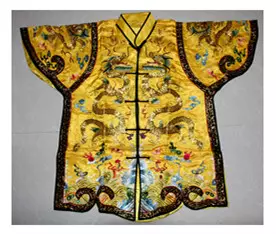
Beijing embroidery, also known as court embroidery, is an ancient traditional Han Chinese embroidery technique. It is a general term for embroidery products centered around Beijing. It began to flourish significantly during the Ming and Qing dynasties. In the late Qing Dynasty, the veteran artisan Liang Zhi learned Beijing embroidery from master embroiderers and later passed the skills down to future generations, a history spanning over a hundred years to this day.
Features: It was primarily used for court decorations and costumes. The materials are exquisite, the craftsmanship superb, and the style elegant. The embroidery techniques, from design, drawing, pattern printing, stretching the fabric, embroidering, to the finished product, are all purely handmade. The patterns in the works are delicate and elegant, the embroidery work meticulous and refined, and the stitching methods rich and superb, offering great ornamental and collectible value.
Inheritor: Liu Jingqi
Qi-Style Seal Carving
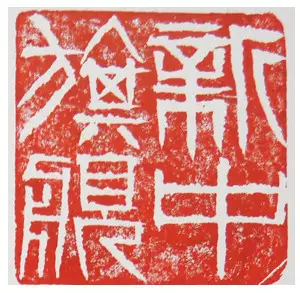
Qi Baishi was not only a renowned master of painting and calligraphy, but also a master of seal carving.
Features: He integrated the calligraphy of Han and Wei dynasties' stele inscriptions into seal carving, forming a style characterized by concise composition and bold, expressive knife work. His approach, often described as freehand and dynamic, established the distinctive Qi style. Song Zhizhong received authentic instruction from Liu Shudu, a disciple of Qi Baishi. Through diligent study and practice, he deeply grasped the essence of the knife techniques, seal script composition, and structural principles of Qi-style seal carving. He has participated in numerous domestic and international exhibitions, receiving widespread acclaim. As an inheritor of Qi-style seal carving, he has been consistently engaged in teaching, successfully promoting and popularizing this art form.
Inheritor: Song Zhizhong
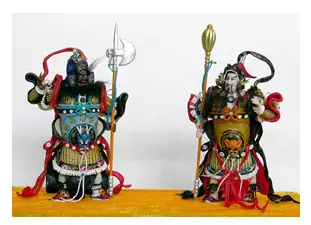
Beijing Silk Figurine
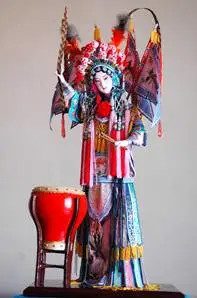
Silk figurines are one of the traditional Han Chinese handicrafts. They originated in the Tang Dynasty. Silk figurines are a category of artistic dolls, closely related to folk toy handicrafts such as "needle dolls" and "colorful paper-mache dolls".
Features: The creation of silk figurines requires the selection of high-quality silk, satin, gauze, and thin silk as raw materials. Artisans undergo over a dozen meticulous manual processes including sculpting, painting, costuming, headdress making, and prop creation to produce figures of historical ladies and opera characters. Qi Congying joined the Beijing Silk Figurine Factory in 1963, studying under older-generation artists such as Song Cuizhen, Ge Jing'an, and Zhang Qin. Her works feature historical ladies, opera characters, Bodhisattvas, and Beijing opera facial makeup figures. They are characterized by exquisite craftsmanship and lifelike representation, having won numerous awards both domestically and internationally. They possess high artistic, aesthetic, and collectible value.
Inheritor: Qi Congying
Intangible cultural heritage is not only a witness to historical development but also a valuable cultural resource. It embodies the wisdom and civilization of the Chinese nation, serving as a vital bond that connects cultural identity and underpins national unity.
(Source: Beijing Haidian)