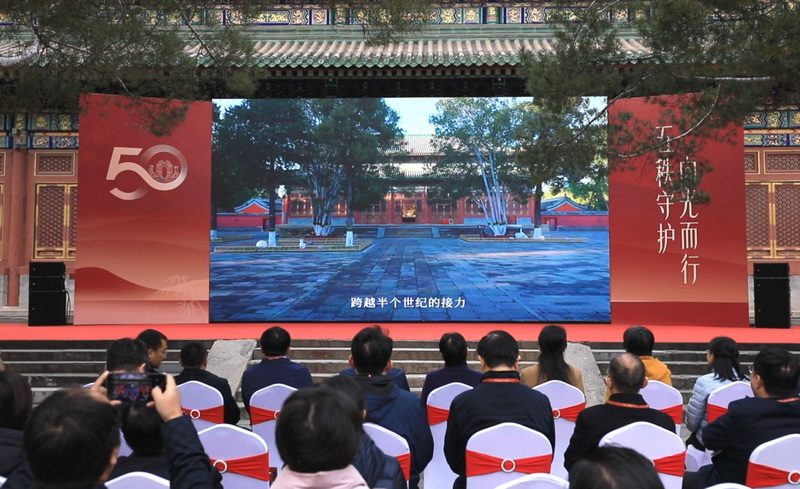
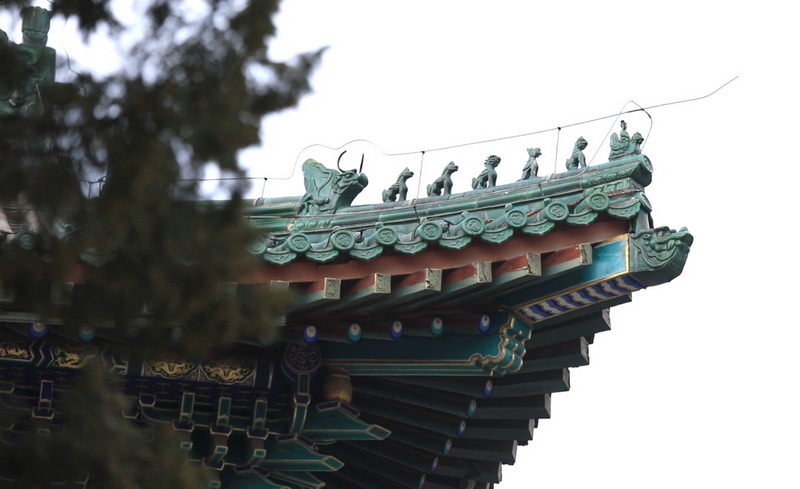
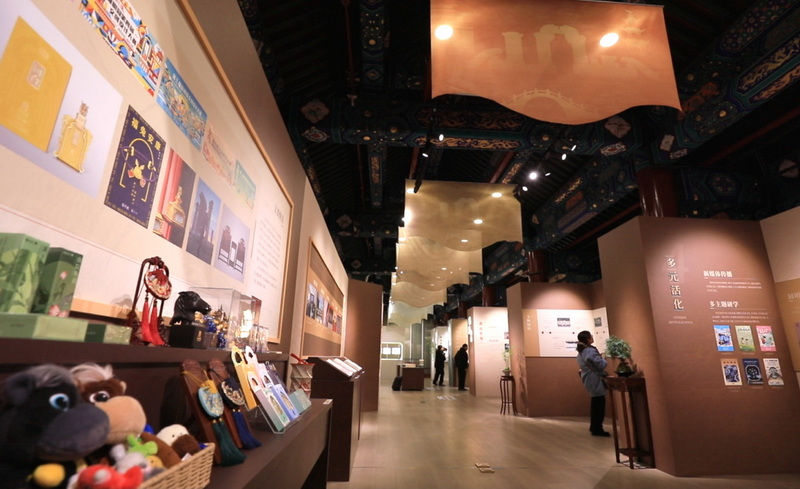
On Nov. 17, in the Zuishang Tower of Zhengjue Temple at the Yuanmingyuan Museum, old photographs spread across the exhibition hall: broken walls in the weeds, figures encircling the park wall in ring after ring, and today's lakes and hills. The exhibition — "Fifty Years of Guardianship, Moving Toward the Light: A Retrospective on the 50th Anniversary of the Yuanmingyuan Management Office" — opened here. At the ceremony, a cultural relic handover and the exhibition opening followed one another, and a digital renewal project, the Yuanmingyuan lantern fair and the "Qingbeili" brand were released together, marking half a century of guardianship carried on from one hand to the next.
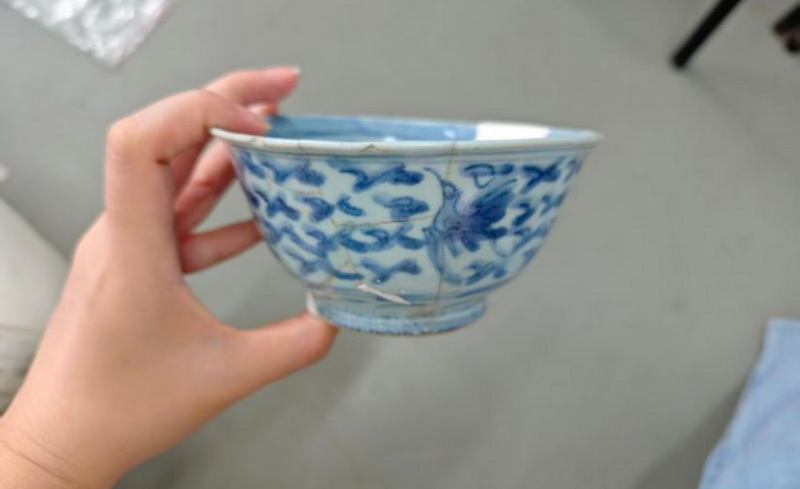
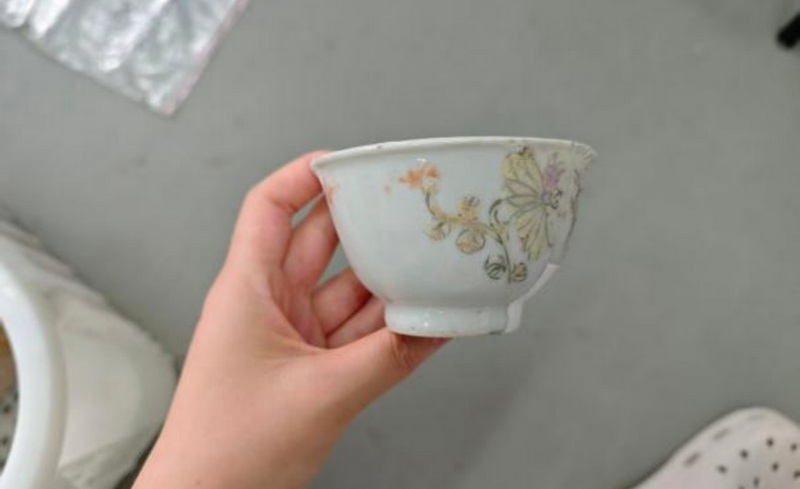

The relay of guardianship first shows in the relics handed into the collection. At the ceremony, with approval from the Beijing Municipal Cultural Heritage Bureau, the Beijing Institute of Archaeology and the Yuanmingyuan Management Office signed a relic transfer agreement and completed the handover of relics excavated at the Zibishanfang site, together with the inventory. The items include a blue-and-white bowl with a crane design, a cup with a double-peach and scrolling-floral design in red enamel, and a cup with a painted floral design.
"The handover of these relics supplements what has been unearthed at Yuanmingyuan," said Qiu Wenzhong, Party secretary and director of the Yuanmingyuan Management Office. The finds provide precious physical evidence for studying how Qing-dynasty mountain gardens were built, he said, and lay a foundation for research on the park's landscaping and garden life as well as for later protection and public display of the site.
Beyond the handover, another path of guardianship extends into digital space. At the ceremony, the management office and ByteDance Public Welfare released a digitization project.
Under the theme "relics as the bones, intangible heritage as the soul," the project uses high-precision spatial reconstruction, generative AI and XR immersive interaction to capture the Haiyantang and Dashuifa sites at millimeter precision and build high-fidelity, reusable, shareable digital assets. It also creates a large-space immersive experience grounded in the real ruins, recreating historic scenes digitally and offering AI-powered personal guidance, so that tangible and intangible cultural heritage is protected and kept alive together. The project leaves Yuanmingyuan a digital base that can be kept permanently and reused, sets a benchmark for XR in cultural heritage settings, and supports the overall protection of the Three Hills and Five Gardens and the digital, living transmission of fine traditional Chinese culture.
The event also released a draft of the "Gazetteer of the Yuanmingyuan Ruins Park" and sought comments from experts and scholars present, so that it can be revised and refined ahead of final publication.
Whether it is a relic handover or digital renewal, this is the story this retrospective sets out to tell. Taking "light" as its thread, the exhibition runs in four chapters — "Glimmer: The Foundation," "Focus: Reviving the Park," "Radiance: Spreading Afar," "Brilliance: Toward the New" — and reviews the work of the management office since it was set up in 1976.
In front of the panels, Xie Xiuqing, former director of the Yuanmingyuan Management Office Exhibition Hall and one of the park's first docents, could barely hold back her emotion. She guided visitors through Yuanmingyuan for more than 30 years and walked every inch of the park.
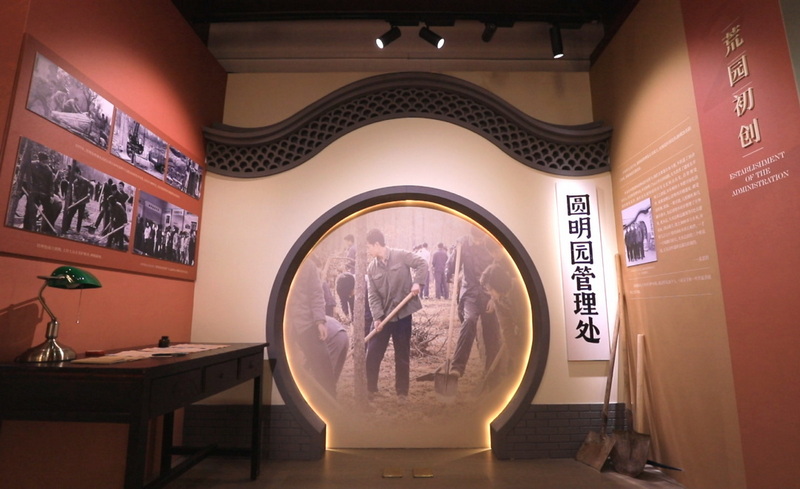
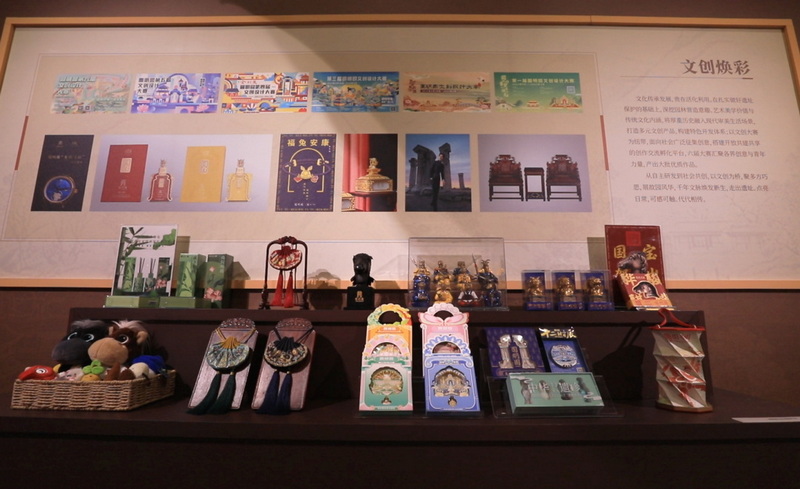
The hall follows the same thread of light. "Glimmer: The Foundation" uses old photographs and miniature sets to show how the Party and the government protected the site, how people from all walks of life made appeals, and how the early work began. "Focus: Reviving the Park" centers on building and using the ruins park, tracing the sequence of "moving out, fencing in, taking charge." "Radiance: Spreading Afar" presents archaeological findings and cultural outreach, recalling touring exhibitions of Yuanmingyuan culture at home and abroad. "Brilliance: Toward the New" has six parts — site management, relic protection, academic research, diversified revitalization, digital renewal and future outlook — showing more refined conservation and increasingly varied digital experiences.