These are the most beautiful and fleeting days of the year in Beijing. After another strong wind, this picturesque autumn scenery will have to wait until next year. While the weather is good, these three stunning spots in Haidian are worth a special trip.
Pingxiangxie, Old Summer Palace: Waterside Reflections, One Oil Painting at Every Step
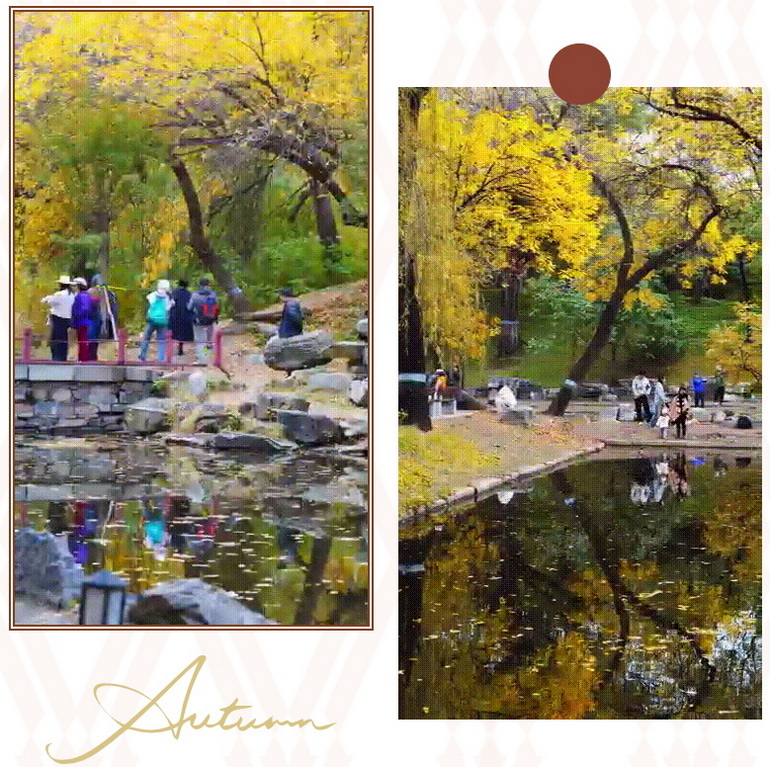
Hidden in Qichun Garden of the Old Summer Palace (Yuanmingyuan) is a secluded waterside spot with few visitors and stunning scenery — Pingxiangxie. It was once one of the Thirty Scenes of Qichun Garden during the Qing Dynasty, with water clover planted all along the water’s edge, carrying a gentle ancient charm. In late autumn, golden branches and leaves hang low toward the lake surface, light and shadow reflected in layered folds. As a gentle breeze passes, the water surface shatters into a pool of warm colors — every casual shot looks like an oil painting.
Practical Guide: Take Subway Line 4 to Yuanmingyuan Station, Exit B. Enter through the South Gate and walk approximately 500 meters. Cross the broken bridge, turn left at the pier, and cross the stone bridge to arrive. Admission is only RMB 10.
Photography Tips: The best times are before 10: 00 a. m. or after 3:00 p. m., when light filters through the leaves and the lake reflections are clearest. Frame both the stone bridge and the branches hanging toward the water together — symmetrical composition most easily creates an “oil painting” feel.
Five Pagoda Temple: Red Persimmons Against the Ancient Pagoda, a Unique Healing Sight
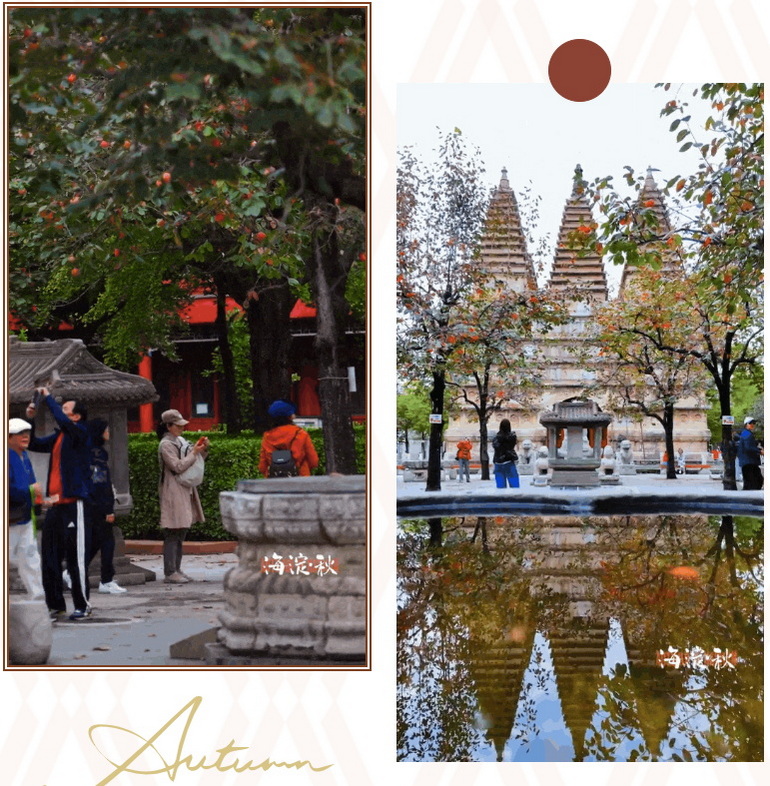
The Five Pagoda Temple is the Beijing Stone Carving Art Museum. The Ming Dynasty Diamond Throne Pagoda stands quietly there, its over 1,500 statues bathed in warm autumn light. The most moving sight in the courtyard is not only the 600-year-old ancient ginkgo. Right now, orange-red persimmons hang from the branches, lantern by lantern, before the eaves of the ancient pagoda, with blue sky as the backdrop and grey bricks as the setting — look up and the ultimate autumn scenery of “ancient temple, red persimmons, clear sky” awaits. “Persimmon” (shi) is a homophone for “matters” (shi) — a tree laden with heavy orange-red fruit is like autumn making a string of “persimmons for everything going well” wishes on your behalf. Compared to the crowds at other internet-famous check-in spots, this place is much quieter and more serene, suitable for slow strolling, quiet appreciation, and taking a set of unhurried autumn photos.
Practical Guide: Take Subway Line 4/9/16 to National Library Station, Exit C, and walk approximately 550 meters. Open Tuesday to Sunday, 9: 00–17: 00; closed on Mondays.
Photography Tips: The sun angle is best from 2: 00 p. m. to 4: 00 p. m., when the layers of persimmons and the ancient pagoda are most distinct. By the water vat in the backyard, you can shoot the symmetrical reflection of the ancient pagoda from a low angle, with an extremely high success rate. The persimmon viewing window is very short, so if you want to capture “persimmons for everything going well”, you need to hurry.
Xiaojiahe Park: Aster Terraced Fields, Romance Without Traveling Far
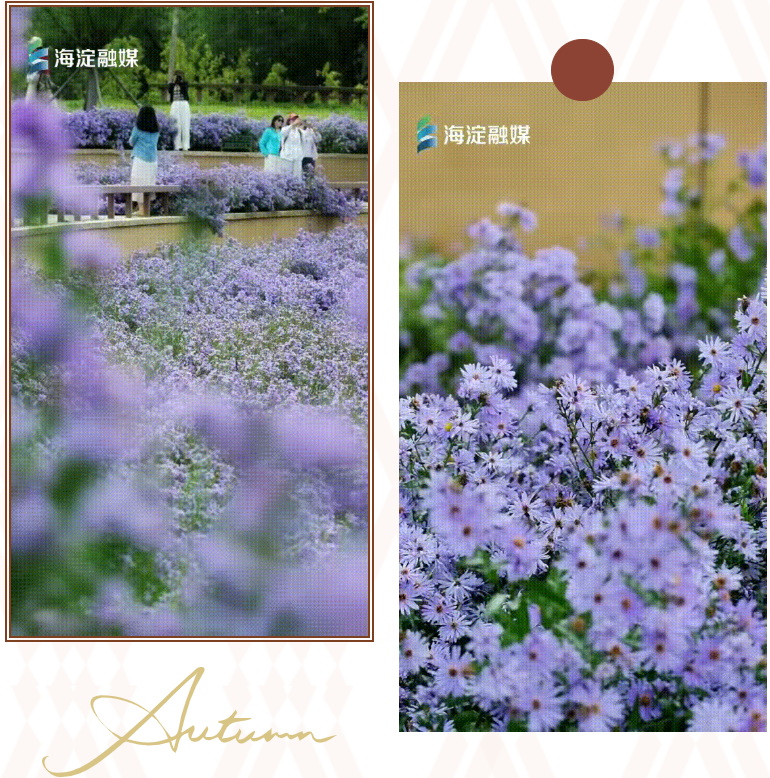
Xiaojiahe Park hides a quiet terraced field of asters. Pale purple blossoms spread layer by layer from the foot of the slope to the top — some dense, some light, some still in bud. Walking inward along the stone path, flowers bloom on both sides, and you walk amid the flowers, unknowingly falling into autumn’s painting. There is no admission fee here, no fences, and no anxiety of queuing up for camera positions. After viewing the flowers, you can also sit a while in the white curved book house “Café&Book” in the woods. The time for a cup of coffee is just right to wait for a breeze to pass over the flower tips. Encountering such an uncrowded purple romance right in the urban area is autumn’s reward.
Practical Guide: Take Subway Line 16 to Nongda Nanlu Station, Exit C, and cycle approximately 10 minutes. Alternatively, take Bus Routes 305,393, 623,636, or 688 to Shucun Station. Free entry, open 24 hours.
Photography Tips: Aster flower clusters are low. Crouch down and use the flowers as the foreground, stepping slightly back, and the frame will have a gentler feeling of being “wrapped” by the flowers. Afternoon side lighting can bring out the layers of petals most transparently.
Beijing’s autumn light never waits for anyone. The reflections at Pingxiangxie fear the wind, the persimmons at the Five Pagoda Temple fear lateness, and the asters at Xiaojiahe are blooming their final splendor. Pick a sunny and pleasant day, go outdoors, and catch this brief yet passionate tenderness of golden autumn.